



How Is EPOWER Industrial Generator Pricing Evaluated in 2026
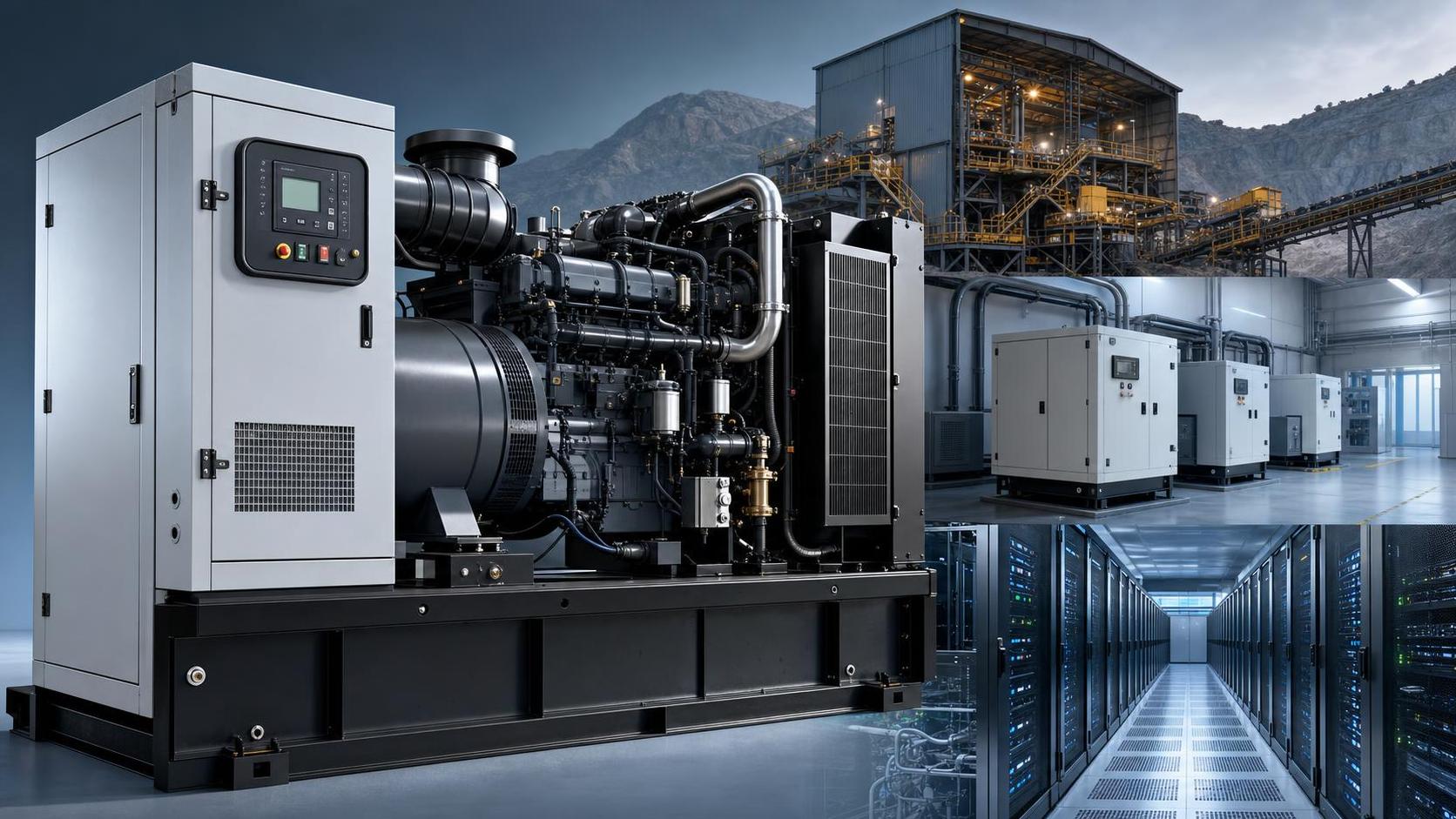
Understanding EPOWER industrial generator pricing in 2026 requires more than comparing base quotes. From power range and engine brands to silent enclosures, voltage options, and export customization, every specification affects total cost. As a source manufacturer, EPOWER helps buyers evaluate price based on application needs, long-term efficiency, and reliable one-stop power solutions for mines, hospitals, data centers, and factories.
What Shapes EPOWER Industrial Generator Pricing in 2026?
When buyers search for EPOWER industrial generator pricing, they often expect a simple number. In practice, pricing is built from technical configuration, operating environment, compliance demands, and delivery scope.
A 100KW open diesel genset for a factory backup project is priced very differently from a 100KW silent export unit for a hospital or telecom site. The rated power may match, but the total solution does not.
In 2026, industrial buyers are also paying closer attention to lifecycle cost. Fuel efficiency, spare parts access, control system compatibility, and installation complexity now influence procurement decisions almost as much as initial purchase price.
Core price drivers buyers should compare
- Power rating and duty type, including standby, prime, or continuous operation requirements.
- Engine brand selection such as Cummins, Perkins, Mitsubishi, Mercedes Benz, Yuchai, Weichai, or Scania.
- Alternator grade, controller functions, ATS integration, and parallel operation capability.
- Open, silent, containerized, high-voltage, gas, or energy storage integrated configuration.
- Export packaging, destination-country standards, documentation, and shipping arrangement.
How Different Configurations Change the Final Quote
The table below helps explain why EPOWER industrial generator pricing varies by configuration rather than by kilowatt alone. Buyers can use it to compare common specification choices before asking for a formal quotation.
The key lesson is simple: low headline pricing can be misleading if the quote excludes the enclosure, control cabinet, ATS, fuel tank, or export preparation your project actually needs.
Which Power Range and Engine Brand Best Fit Your Budget?
EPOWER manufactures diesel generator sets from 20KW to 3000KW. That wide range matters because the pricing logic for small backup units is very different from the logic used for large industrial or data center power systems.
Smaller sets are often selected for short-duration backup. Mid-range units commonly serve factories, commercial buildings, and medical support power. Larger systems usually involve synchronization, higher fuel planning, transport constraints, and site engineering.
Budget matching by project type
Brand choice also matters. Some buyers prioritize internationally recognized engine brands for multinational projects or spare parts planning. Others focus on cost control and practical local-service support. The best option depends on uptime target, budget structure, and destination market.
Why engine brands affect generator pricing
- Different engine brands have different cost structures, service intervals, and fuel consumption profiles.
- Project owners may specify certain brands for consistency with existing fleets or maintenance contracts.
- Export markets may prefer brands with stronger regional dealer support and easier spare parts sourcing.
How Application Scenarios Influence EPOWER Industrial Generator Pricing
A major reason buyers misread EPOWER industrial generator pricing is that they compare machines from completely different operating environments. Application drives specification, and specification drives cost.
Hospitals and medical facilities
Hospitals often require fast startup, reliable ATS integration, stable voltage output, and lower noise. In many projects, the generator package must support critical loads rather than general loads only.
Data centers
Data center pricing evaluation usually includes redundancy design, synchronization, load acceptance, remote monitoring, and long-duration fuel strategy. The quoted machine alone is only one part of the total power architecture.
Mines and heavy industry
Mining projects may require durable structures, high-capacity output, dust-resistant considerations, and dependable supply under harsh conditions. Transport method and on-site installation difficulty can increase total project cost.
Factories and manufacturing plants
Factory backup power often balances budget and operational continuity. Buyers focus on sufficient starting capacity for motors, practical fuel consumption, and compatibility with existing electrical infrastructure.
What Buyers Should Check Before Requesting a Quote
If you want accurate EPOWER industrial generator pricing, prepare your project inputs first. Vague requests lead to vague quotations, and vague quotations often cause delays, revisions, or budget surprises.
Practical quotation checklist
- Confirm required power in KW or KVA, and state whether the rating is standby or prime.
- List the main loads, especially motors, pumps, compressors, cooling systems, or IT equipment.
- Specify frequency, voltage, phase, and any special electrical standards required by the project.
- Choose open type, silent type, trailer type, high-voltage, gas, or integrated energy storage support if needed.
- Share destination country, delivery terms, and whether export documentation or special packing is required.
Source manufacturers like EPOWER can usually provide more useful pricing guidance when buyers share real operating conditions instead of requesting only a lowest-cost unit.
Base Price vs Total Ownership Cost: Which One Matters More?
The lowest quote is not always the lowest long-term cost. In generator procurement, fuel burn, service access, spare parts planning, and downtime risk can quickly outweigh a small upfront saving.
This is especially true for users in hospitals, mines, and data centers, where power failure can interrupt critical operations and create losses far greater than equipment price differences.
Common hidden costs buyers overlook
- Undersized units that trip during peak load or cannot handle motor starting current.
- Low-spec acoustic enclosures that restrict ventilation and affect stable running.
- Missing accessories such as ATS, day tank, base tank, battery charger, or remote monitoring module.
- Unexpected export or site costs including lifting, customs documentation, local compliance checks, and installation support.
How a Source Manufacturer Helps Buyers Control Cost
Guangdong Yundong Diesel Generator, operating as EPOWER in Foshan, offers an advantage that many buyers value in 2026: direct manufacturing support from product selection through export coordination.
For industrial generator buyers, this matters because pricing becomes clearer when engineering, production, configuration, and delivery discussion happen within one coordinated process.
Where EPOWER adds practical procurement value
This approach does not mean every project follows the same pricing path. It means buyers can evaluate cost with better technical context and fewer blind spots.
What About Standards, Export Requirements, and Project Compliance?
Compliance can affect EPOWER industrial generator pricing even before production starts. Destination-country rules, project specifications, and industry expectations may change panel design, labeling, testing documents, or protective features.
For example, hospitals, public infrastructure, and data facilities often request more detailed technical confirmation. Export projects may also require clearer documentation for customs, installation review, or owner acceptance.
- Confirm local frequency and voltage before production.
- Clarify whether noise limitations apply to the installation site.
- Check whether the project needs special testing, documentation, or labeling.
- Ask early about switchgear, ATS, remote monitoring, and synchronization requirements.
FAQ About EPOWER Industrial Generator Pricing
Why is the same power rating quoted at different prices?
Because power rating is only one variable. Engine brand, alternator specification, control system, enclosure type, voltage requirement, export packaging, and application environment all influence the final price.
Is a silent generator always the better choice?
Not always. Silent units are often preferred for hospitals, urban facilities, and sites with noise restrictions. Open units may be more suitable when equipment rooms already provide acoustic separation and budget control is a higher priority.
How can I reduce generator procurement cost without taking too much risk?
Start by sizing the unit correctly, then remove unnecessary options rather than cutting essential reliability features. A practical manufacturer discussion can help you balance enclosure type, control functions, brand preference, and site needs.
What information should I send to get an accurate quotation?
Provide power requirement, usage type, load details, voltage, frequency, installation environment, preferred engine brand if any, destination country, and whether you need ATS, synchronization, silent canopy, or export customization.
Why Many Buyers Reassess Generator Pricing in 2026
The market has become more specification-driven. Buyers are no longer looking only for equipment. They want power continuity, predictable operating cost, and simpler project execution across procurement, logistics, and deployment.
That is why EPOWER industrial generator pricing is increasingly evaluated as part of a complete solution. For mines, hospitals, data centers, and factories, the right quote is the one that matches real duty conditions and long-term operating goals.
Why Choose Us and What Can You Ask Before Ordering?
If you are comparing EPOWER industrial generator pricing for a new project or backup power upgrade, a useful next step is to confirm the technical scope before comparing numbers line by line.
Guangdong Yundong Diesel Generator can support discussions on 20-3000KW diesel generator selection, engine brand matching, open or silent configuration, high-voltage or gas power options, export customization, and one-stop power supply planning.
- Ask for help confirming your required KW or KVA and whether standby or prime rating is more appropriate.
- Request model comparison based on application scenario, from factory backup to hospital or data center support.
- Check delivery lead time, export packing scope, and destination-specific documentation needs.
- Discuss customization options for canopy type, voltage, controller, ATS, synchronization, and site conditions.
- Request a quotation that clearly separates generator configuration, optional accessories, and project support items.
A detailed inquiry usually leads to a more accurate quote, a better-matched generator, and fewer project changes later. For industrial buyers in 2026, that is the most reliable way to evaluate price.
Specialized field of steel wire ropes
24/7 before-sales and after-sales services
Comprehensive technical support