



Comparing Diesel Generator Set Fuel Efficiency Under Continuous Load
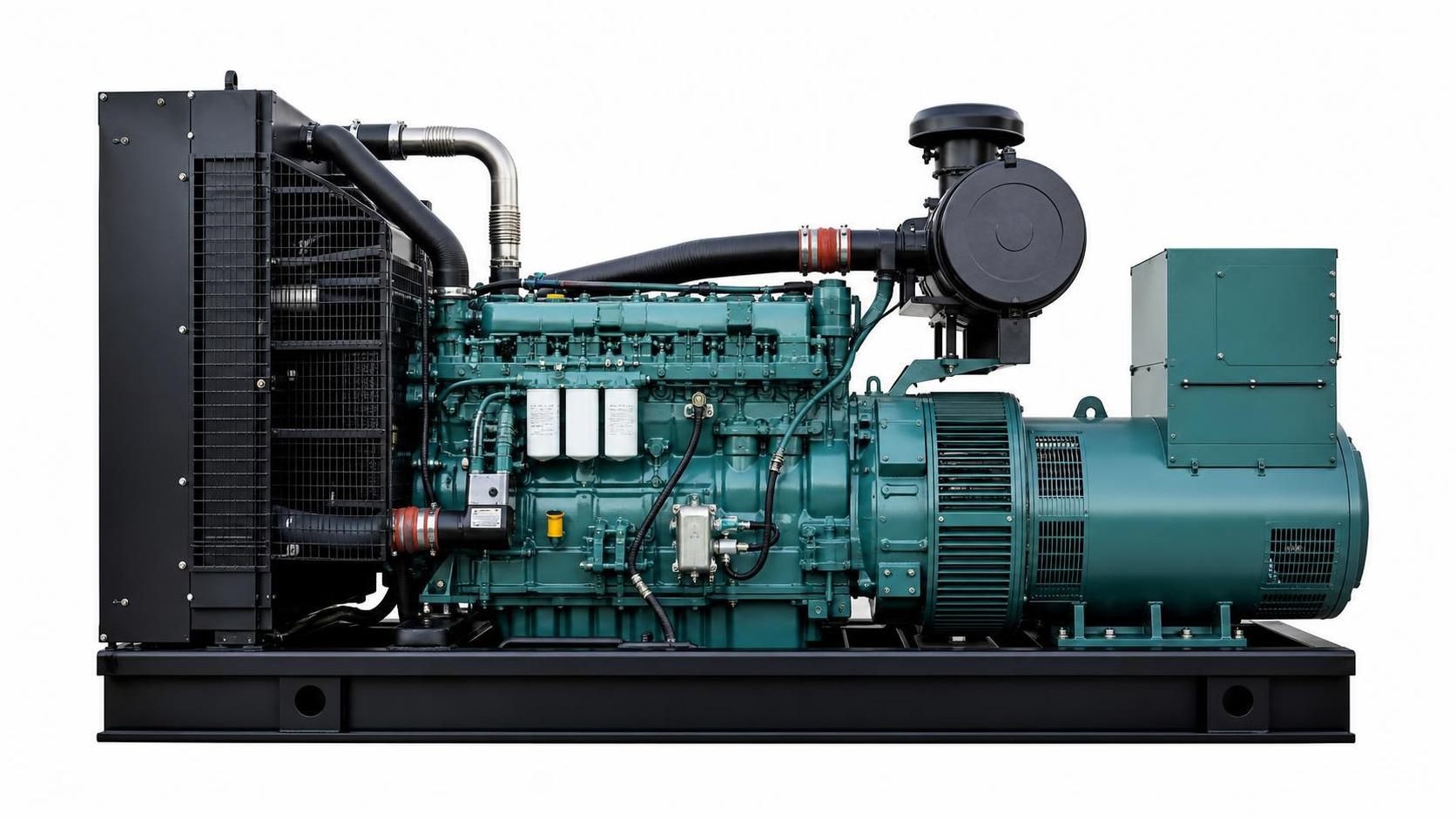
Why Continuous Load Efficiency Defines True Operating Cost
For any technical evaluator, the fuel consumption of a diesel generator set under continuous load is the single most influential variable in long-term operational budgeting. Unlike standby applications where the unit runs only during outages, continuous load operation—common in mines, data centers, and hospital backup systems—demands sustained efficiency over thousands of hours. A difference of just a few liters per hour can translate into tens of thousands of dollars in annual fuel expense.
This analysis compares the fuel efficiency of several leading diesel generator set brands under continuous load conditions, focusing on real-world performance rather than theoretical ratings. The goal is to help evaluators move beyond specification sheets and understand how each platform behaves when the load is steady and the run time is long.
The Relationship Between Load Factor and Fuel Consumption
Fuel efficiency in a diesel generator set is not a fixed number. It changes significantly with load factor. Most engines achieve their best brake-specific fuel consumption (BSFC) at 70% to 85% of rated load. Operating below 30% load for extended periods wastes fuel and risks wet stacking, a condition where unburned fuel accumulates in the exhaust system.
For continuous load applications, the unit should be sized so that the typical operating load falls within this sweet spot. A 2000kW set running at 70% load will almost always be more efficient than a 1000kW set running at 100% load, even if the power output is the same. This is a fundamental principle that evaluators must check before comparing brand-level efficiency.
Key Efficiency Metrics to Track
When assessing a diesel generator set, three metrics matter most: liters per hour at 75% load, liters per kilowatt-hour, and the efficiency curve shape across the 50% to 100% load range. The first two are standard, but the third reveals how well the engine handles partial loads, which is critical for variable continuous applications.
- Liters per hour at 75% load – This is the most commonly referenced benchmark for continuous duty.
- Liters per kWh – A normalized measure that allows direct comparison between different power ratings.
- Efficiency curve shape – A flat curve means the engine stays efficient even when load fluctuates.
Cummins: Proven Reliability with Consistent Efficiency
Cummins diesel generator sets are widely recognized for their robust fuel systems and consistent combustion efficiency. In continuous load applications, the QSK series stands out. At 75% load, a typical QSK60-G23 (2000kW) consumes approximately 380 to 400 liters per hour, depending on ambient conditions and fuel quality. This translates to a brake-specific fuel consumption of around 200 to 210 g/kWh.
What makes Cummins particularly strong for continuous duty is its electronic engine management. The ECM adjusts injection timing and boost pressure in real time, maintaining efficiency as the load changes. For hospitals and data centers where load can shift between 50% and 85% throughout the day, this adaptive control reduces fuel waste.
However, evaluators should note that Cummins sets require high-quality fuel and regular maintenance to maintain peak efficiency. Fuel contamination or neglected injector service can quickly degrade performance by 5% to 8%.
Perkins: Precision Engineering for Steady Operations
Perkins engines, particularly the 4000 series, offer excellent fuel efficiency under steady continuous loads. A Perkins 4008TAG2 (750kW) at 75% load typically consumes around 140 to 150 liters per hour, with a BSFC in the 195 to 205 g/kWh range. This makes Perkins one of the more efficient options in the mid-power segment.
The key advantage of Perkins is its mechanical simplicity on certain models, combined with advanced combustion chamber design. For mines and remote industrial sites where electronic diagnostics may be limited, a Perkins diesel generator set can maintain consistent efficiency with relatively straightforward maintenance.
One area where Perkins excels is low-load stability. The 4000 series engines can run at 40% load for extended periods without significant efficiency loss or wet stacking, which is a distinct advantage for applications where the full load is not always required.
Yuchai: Cost-Effective Efficiency for Industrial Duty
Yuchai diesel generator sets have gained significant traction in the global market for their balance of low initial cost and competitive fuel efficiency. The YC6C series, commonly used in the 500kW to 1000kW range, delivers fuel consumption figures around 210 to 220 g/kWh at 75% load. While not as low as the top-tier European or American engines, the gap is narrowing.
For continuous load applications in factories or backup power in developing regions, Yuchai offers a practical value proposition. The engines are designed to tolerate a wider range of fuel quality, which reduces the risk of efficiency loss due to fuel variability. This is an important consideration in regions where diesel sulfur content or cetane number fluctuates.
The real cost advantage of a Yuchai diesel generator set becomes apparent when total cost of ownership is calculated over 10,000 hours. The lower initial investment, combined with reasonable fuel consumption, often results in a lower per-kilowatt-hour cost than more expensive brands, assuming the load profile is consistent and maintenance is performed on schedule.
Comparing Efficiency Across Brands and Applications
The following table summarizes the typical fuel efficiency of diesel generator set configurations from three leading brands under continuous load. These figures are based on real-world operating data and manufacturer specifications under standard conditions.
These numbers are indicative. Actual performance will vary based on site altitude, ambient temperature, fuel quality, and the specific configuration of the diesel generator set, including the alternator type and cooling system.
The Role of Engine Configuration in Efficiency
Beyond brand, the engine configuration itself plays a major role in determining fuel efficiency. Inline 6-cylinder engines, common in mid-range diesel generator sets, balance efficiency with mechanical simplicity. For larger continuous loads above 1500kW, V16 or V20 configurations are more common, but they introduce additional friction losses.
Turbocharging and aftercooling are standard on modern diesel generator sets. A well-matched turbocharger increases air density, allowing more complete combustion and reducing fuel consumption by 5% to 10% compared to naturally aspirated engines. For continuous load applications, a water-cooled turbocharger is preferable because it extends component life under sustained heat.
Fuel System Technology Matters
Common rail fuel injection systems, now standard on many Cummins and Perkins engines, offer precise control over injection timing and quantity. This reduces fuel consumption by 3% to 5% compared to older mechanical pump systems. However, common rail systems are more sensitive to fuel contamination. For mines and remote sites, a mechanically injected diesel generator set may offer better overall reliability, even if the raw efficiency is slightly lower.
Evaluators should weigh the efficiency gain of common rail against the maintenance infrastructure available at the installation site. In a controlled data center environment, common rail is the clear winner. In a remote mine, a mechanically injected engine with a slightly higher BSFC may be the more practical choice.
Practical Considerations for Technical Evaluators
When comparing diesel generator set fuel efficiency under continuous load, evaluators should look beyond the manufacturer’s data sheet. Real-world conditions rarely match the standard test conditions used in a factory. Altitude, ambient temperature, and fuel quality all directly affect fuel consumption.
- Altitude derating: For every 300 meters above 1500 meters, engine power drops by approximately 3% to 5%, and BSFC increases. A diesel generator set operating at 3000 meters altitude will consume 5% to 8% more fuel per kWh than at sea level.
- Ambient temperature: High ambient temperatures reduce air density, forcing the engine to work harder. At 40°C, fuel consumption can increase by 2% to 4% compared to 25°C.
- Fuel quality: Low cetane numbers or high sulfur content can reduce combustion efficiency by 3% to 6%. Using a diesel generator set with a fuel polishing system is recommended for continuous operation.
These factors are not just theoretical. They directly impact the annual fuel budget. A 1000kW diesel generator set running 6000 hours per year at 75% load will consume roughly 720,000 liters of diesel. A 5% efficiency loss due to altitude or fuel quality adds 36,000 liters per year in fuel cost, a significant figure that must be factored into the selection process.
The Value of a One-Stop Supply Partner
Selecting the right diesel generator set for continuous load is not just about comparing engine brands. It also involves matching the set with the correct alternator, cooling system, and control panel. A mismatched alternator can reduce overall efficiency by 1% to 2%, and an undersized radiator can cause the engine to run at higher temperatures, increasing fuel consumption.
A source manufacturer like Guangdong Yundong Diesel Generator (EPOWER) offers a practical advantage here. With access to Cummins, Perkins, Mercedes Benz, Mitsubishi, Yuchai, Weichai, and Scania engines, and the ability to integrate open, silent, high-voltage, gas, or energy storage configurations, the company can tailor a solution to the specific load profile and site conditions. This one-stop approach reduces the risk of component mismatch and ensures that the diesel generator set operates at its design efficiency from day one.
For technical evaluators, working with a manufacturer that can provide custom fuel system tuning, appropriate alternator selection, and site-specific derating calculations is a direct path to lower operating costs. The efficiency of the diesel generator set is only as good as the integration of its components.
Next Steps in the Evaluation Process
Comparing fuel efficiency under continuous load is a data-driven process. The most reliable approach is to request a fuel consumption curve from the manufacturer for the specific diesel generator set model at the site’s altitude and temperature conditions. This curve should cover the 50% to 100% load range, not just the 75% point.
From there, calculate the total cost of ownership over the expected mission life. Include fuel cost at the local rate, maintenance intervals, and the cost of any efficiency losses due to environmental factors. This will provide a clear comparison between brands and configurations.
Finally, consider the application load profile. If the load is steady and predictable, a Perkins or Yuchai diesel generator set may offer the best balance of efficiency and cost. If the load varies, a Cummins set with adaptive electronic controls may save more fuel over time. The right choice depends on the specific continuous duty scenario, and a detailed evaluation of site conditions is the only way to make that decision with confidence.
Specialized field of steel wire ropes
24/7 before-sales and after-sales services
Comprehensive technical support