



High-Voltage Generator Set Installation Requirements for Data Centers
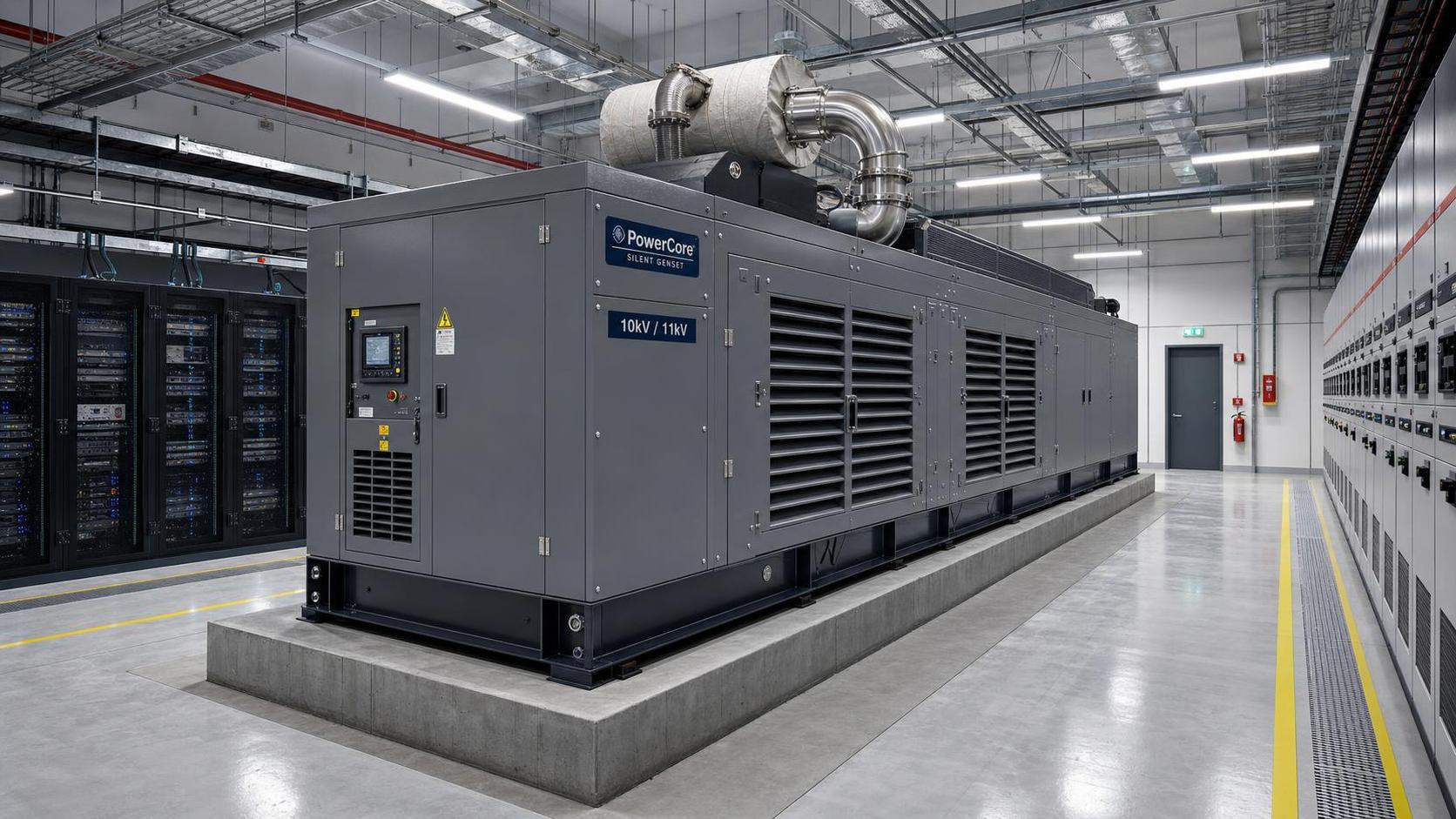
Why Does a Data Center Need a High-Voltage Generator Set?
A data center is the backbone of modern digital operations. Even a brief power interruption can lead to massive data loss, transaction failures, and significant revenue damage. Standard low-voltage generators are often sufficient for smaller facilities, but as data centers scale up, their power demands become immense.
A high-voltage generator set, typically operating at 10 kV or 11 kV, is designed to handle these larger loads more efficiently. The primary advantage lies in the reduction of current. Higher voltage means lower current for the same power output, which allows for the use of smaller, less expensive cables and reduces transmission losses. This is crucial for minimizing operational costs in a facility that runs 24/7.
Furthermore, integrating a high-voltage generator directly into the data center’s main electrical infrastructure simplifies the switchover process during an outage. It eliminates the need for heavy, expensive step-up transformers, creating a more streamlined and reliable backup power chain. For operators planning a new facility or a major expansion, considering a high-voltage setup from the start is a strategic move for long-term efficiency and scalability.
What Are the Key Site Preparation Requirements for Installation?
Site preparation is the foundation of a successful installation. It’s not just about finding a place to put the generator; it’s about creating an environment that ensures safety, accessibility, and long-term reliability. The first consideration is the physical space itself. The generator set, whether it's an open or a soundproofed unit, needs a stable, level concrete pad that can support its weight, especially when fully fueled.
Adequate ventilation is another critical factor. A high-voltage generator produces significant heat, and proper airflow is required to prevent overheating. This is particularly important for enclosed units. The room or enclosure must have both intake and exhaust louvers sized to the engine’s cooling air requirements. Additionally, the area must be free of combustible materials and designed to contain any potential fuel or coolant spills.
Finally, think about service access. The unit needs clearance on all sides for routine maintenance tasks like oil changes, filter replacements, and belt inspections. A common mistake is to install the generator in a space that is too tight, making simple maintenance a logistical nightmare. Planning for these clearances upfront saves time and money in the long run.
How Does the Electrical Integration Process Work?
The electrical integration of a high-voltage generator set is a complex process that must be handled by qualified professionals. The core requirement is synchronization with the utility power or the facility’s other generators. This means the generator’s output voltage, frequency, and phase angle must match the grid before it can take over the load.
A key component here is the automatic transfer switch (ATS) or, for more complex setups, a parallel switchgear. The ATS monitors the utility power. When it detects a failure, it sends a start signal to the generator. Once the generator is stable, the ATS transfers the load from the utility to the generator. For high-voltage systems, this switchgear is more robust and includes sophisticated protection relays to manage the higher voltage and current levels.
It is also essential to consider the grounding system. High-voltage systems require a solid, low-impedance ground path to ensure fault currents are safely dissipated. This protects both the equipment and the personnel working on it. Consulting with a licensed electrical engineer familiar with local codes is non-negotiable for this phase.
What Are the Common Mistakes to Avoid During Installation?
Even with a well-designed plan, some installation pitfalls can compromise the entire system. One of the most frequent errors is improper sizing of the fuel supply system. The generator’s fuel consumption rate must be matched with the tank size and the fuel delivery system. A small tank might be fine for short outages, but for a data center, a large, day-tank system with automatic refill is often necessary to ensure continuous operation for 24 to 48 hours.
Another common mistake is neglecting the exhaust system. The exhaust from a diesel engine is extremely hot, and it must be routed away from the building, equipment, and air intakes. Using proper, insulated exhaust piping and ensuring it is not near any flammable materials is vital. Incorrect exhaust routing can lead to carbon monoxide buildup, which is a serious safety hazard.
Finally, do not overlook the importance of the battery system. The batteries are the starting point for the entire backup process. If they are undersized, poorly maintained, or located in an area with extreme temperatures, the generator may fail to start when needed most. Reliable, high-capacity batteries and a properly sized battery charger are essential.
A Quick Guide to Installation Priorities
To help you keep track of the critical steps, here is a simple checklist of the main installation requirements. This table summarizes the key areas we have discussed.
How to Choose the Right High-Voltage Generator for Your Data Center?
Selecting the right generator set is about more than just the power rating. The type of engine, its reliability, and the quality of the alternator are all critical factors. For a data center, which demands high reliability, brands like Cummins, Perkins, and Mercedes Benz are often preferred. These engines are known for their robust construction and long service intervals, which is essential for a facility that cannot afford downtime.
Another important consideration is the enclosure type. A silent, soundproofed enclosure is a must for most data centers, as they are often located in or near urban areas or office spaces. These units are designed to significantly reduce noise levels, making them suitable for continuous operation without disturbing the environment. They also come with integrated weather protection, which is a bonus for outdoor installations.
The power range of your high-voltage generator set should also be carefully calculated. A 20-3000KW range, as offered by EPOWER, provides flexibility for different sizes of data centers. The key is to not just match the total connected load, but to account for starting currents of large equipment like cooling systems. A generator that is too small may struggle to handle the initial surge, causing a failure to take over the load.
What Are the Long-Term Maintenance Considerations?
Installation is just the beginning. A high-voltage generator set requires a rigorous maintenance schedule to ensure it performs when needed. This includes regular oil and filter changes, coolant level checks, and battery testing. It is also crucial to run the generator under load for a set period each month. This practice, known as load banking, burns off carbon deposits, cleans the exhaust system, and verifies the engine’s ability to handle its full rated capacity.
Another aspect of maintenance is software and control system updates. Modern generators are equipped with advanced controllers that manage the synchronization and load sharing. These controllers require periodic software updates to fix bugs and improve performance. Neglecting these updates can lead to system instability. Partnering with a manufacturer that offers one-stop support, from initial installation to ongoing service, can simplify this process significantly.
Finally, consider the logistics of parts availability. For a critical application like a data center, having a supply of high-consumption parts like filters, belts, and hoses on-site is a good practice. This minimizes downtime if a component fails during a routine inspection. A reliable source manufacturer can provide guidance on the best spare parts inventory for your specific model.
Conclusion: Building a Reliable Backup Power Strategy
Installing a high-voltage generator set in a data center is a significant project that demands careful planning and execution. From the initial site preparation and electrical integration to the choice of engine and ongoing maintenance, every step has a direct impact on the reliability of your backup power system. The goal is to create a system that activates seamlessly, provides stable power, and requires minimal intervention.
The next step is to translate this knowledge into action. Start by reviewing your facility’s current power requirements and future growth plans. Consider the specific environmental conditions of your site. Then, evaluate different generator configurations, such as open for indoor installations or silent for noise-sensitive areas, and consult with a knowledgeable source manufacturer like Guangdong Yundong.
A well-chosen and properly installed high-voltage generator set is an investment in the continuity of your business. By focusing on the specific requirements outlined here, you can ensure your data center has the reliable backup power it needs to operate without interruption, protecting your data, your reputation, and your bottom line.
Specialized field of steel wire ropes
24/7 before-sales and after-sales services
Comprehensive technical support