



How Do Diesel Generator Sets Compare in Fuel Consumption
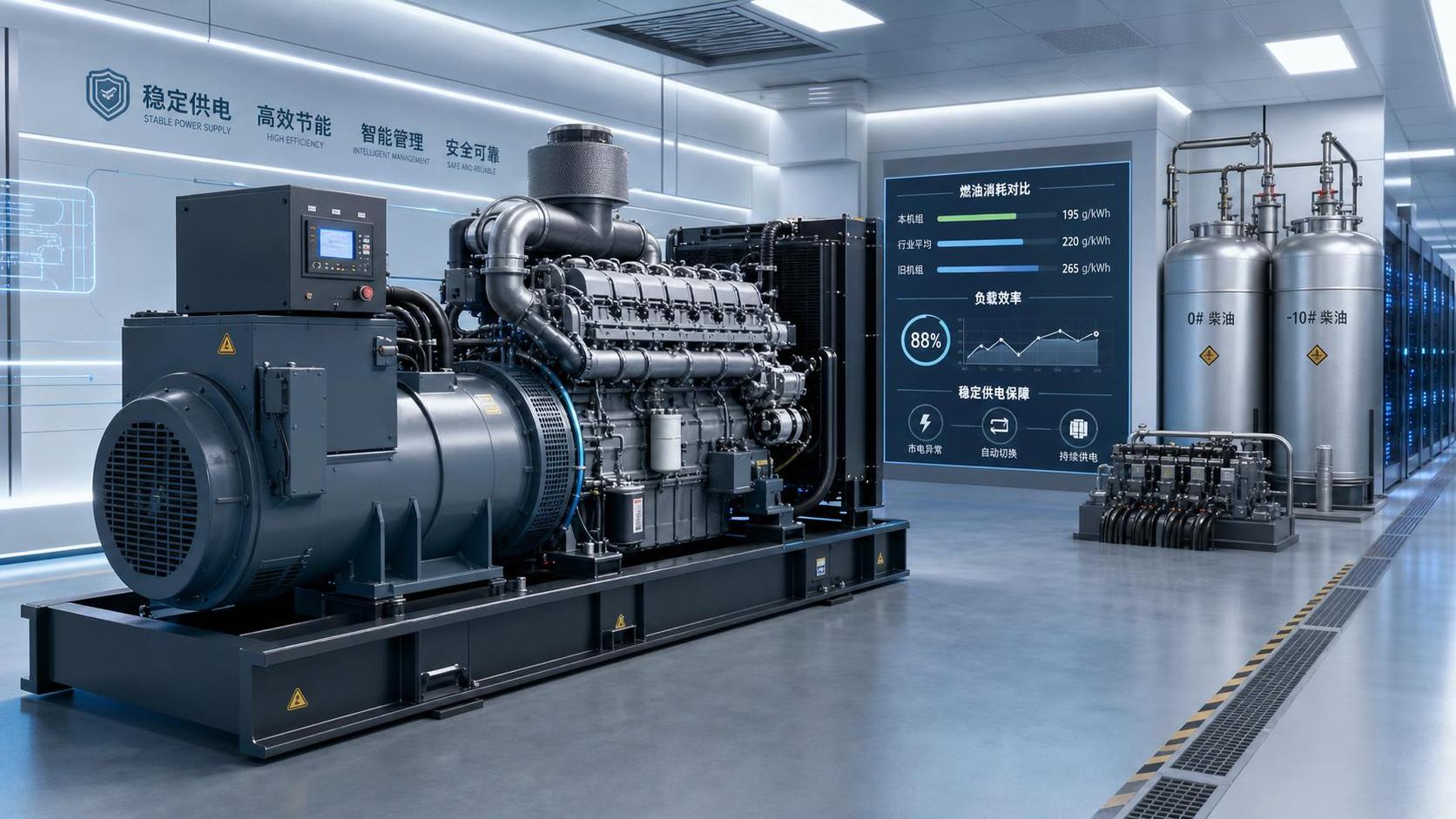
When evaluating backup or prime power options, a diesel generator set fuel consumption comparison is one of the most practical ways to control long-term operating costs. Fuel efficiency can vary widely depending on engine brand, load rate, power range, and application scenario. For mines, hospitals, data centers, and factories, understanding these differences helps buyers choose a generator set that balances performance, reliability, and total ownership cost.
Why does diesel generator set fuel consumption comparison matter so much?
Many buyers focus first on purchase price, but daily fuel burn usually has a larger impact over the service life of a generator. A proper diesel generator set fuel consumption comparison helps reveal the true operating cost behind similar-looking power ratings.
In the generator industry, fuel use is not just an engine issue. It is influenced by alternator matching, control strategy, site altitude, ambient temperature, maintenance quality, and whether the unit runs as standby power or continuous prime power.
For hospitals and data centers, even a small difference in fuel efficiency matters because long runtime during emergencies can quickly increase logistics pressure. For mines and factories, where load profiles can fluctuate sharply, matching the set to the real duty cycle becomes even more important.
- Lower fuel consumption can reduce hourly operating cost and improve budget predictability.
- A better-matched generator often delivers more stable loading, which helps engine efficiency.
- Fuel-efficient units can reduce the frequency of refueling, an important factor in remote projects.
- Comparing only nameplate kW without considering load rate may lead to oversizing and unnecessary diesel use.
What factors change generator fuel consumption in real projects?
A diesel generator set fuel consumption comparison becomes meaningful only when the comparison conditions are clear. The same 500kW set may show very different results at 30%, 70%, or 100% load.
Load rate is usually the first variable
Most diesel generator sets operate most efficiently within a moderate load band rather than at very low load. Running for long periods below the recommended load range can increase specific fuel consumption and may also lead to wet stacking in some engines.
Engine brand and calibration make a difference
Different engine platforms from Cummins, Perkins, Mitsubishi, Mercedes Benz, Scania, Weichai, or Yuchai can show different fuel curves under the same power range. The difference is not always dramatic, but in long-hour operation it becomes financially visible.
Site conditions also matter
High altitude, high temperature, dust, and poor ventilation can all affect combustion efficiency and derating. This is why the same set in a coastal factory and a remote mining site may not deliver the same fuel economy.
Configuration affects system efficiency
Open type, silent type, high-voltage units, and special export configurations may have different cooling and auxiliary power demands. While these are not the main fuel drivers, they still influence the total system performance.
Diesel generator set fuel consumption comparison by load condition
The table below shows a practical framework for diesel generator set fuel consumption comparison. These values are general reference ranges for understanding trends, not fixed promises for every model or site.
This comparison shows why buyers should not select a set only by peak demand. If the real average load remains too low, fuel cost per useful kWh may rise, even if the generator itself is from a strong global engine brand.
Which applications have the biggest fuel consumption differences?
The right diesel generator set fuel consumption comparison should be linked to the actual application. A hospital backup generator and a mine prime power generator face very different running patterns.
The following table helps buyers compare application scenarios before asking for a quotation or technical proposal.
For remote mines, fuel transport and storage can make total energy cost much higher than the generator purchase cost suggests. For hospitals and data centers, low fuel consumption must be balanced with response speed, voltage stability, and compliance planning.
How to compare engine brands and power ranges more practically
Brand reputation matters, but buyers should compare fuel data in context. A 200kW set and a 1000kW set cannot be judged by the same simple liters-per-hour question. The useful comparison is liters per hour at the expected load, together with liters per kWh output.
What to ask suppliers for
- Fuel consumption figures at 25%, 50%, 75%, and 100% load under standard conditions.
- Standby, prime, and continuous rating definitions to avoid rating confusion.
- Engine and alternator matching details, especially for motor-heavy or nonlinear loads.
- Local derating recommendations for altitude, ambient temperature, and enclosure design.
As a source manufacturer in Foshan, Guangdong Yundong Diesel Generator (EPOWER) works across 20-3000KW diesel generator sets and multiple engine brands. This wider product coverage helps buyers compare options based on application, runtime pattern, and export requirements rather than on one single catalog model.
Procurement guide: how to avoid fuel-cost mistakes
A good diesel generator set fuel consumption comparison should support purchasing decisions, not remain a technical note. The following steps can reduce costly errors during selection.
- Define the real operating mode first. Is the set for standby, prime power, peak shaving support, or continuous duty?
- Calculate average and peak load separately. This prevents oversizing caused by using peak figures only.
- Check starting characteristics of major loads such as pumps, compressors, and HVAC motors.
- Review fuel tank autonomy based on likely outage hours, not ideal conditions.
- Consider enclosure type, noise limits, transport route, and local service access before finalizing.
In export and project supply, customization often matters as much as engine efficiency. Silent type units for urban facilities, high-voltage units for larger industrial systems, and integrated energy solutions may each shift the best fuel-cost decision.
Fuel cost versus total ownership cost: what should buyers really compare?
Fuel cost is critical, but it should not be isolated from maintenance intervals, spare parts access, controls integration, and installation conditions. A slightly lower hourly fuel figure may not be the best value if the system is harder to maintain in the destination market.
For example, buyers in Africa, Southeast Asia, or the Middle East may prefer engine platforms with stronger parts availability in their region. In those cases, the best diesel generator set fuel consumption comparison includes both operating efficiency and service practicality.
Common hidden costs
- Oversized sets running at low load for long periods.
- Extra fuel transport to remote sites due to poor efficiency planning.
- Improper ventilation or exhaust design causing performance loss.
- Lack of synchronization planning when multiple units would perform better than one large set.
Standards, testing conditions, and realistic expectations
When reviewing fuel figures, ask under which conditions they were measured. Industry references often rely on standard ambient conditions and rated operation assumptions. Real sites may differ due to temperature, altitude, fuel quality, and load harmonics.
It is also useful to align on common generator rating terminology and relevant electrical standards used in the destination project. This is especially important for hospitals, data centers, and cross-border procurement where documentation and compliance review can affect approval timelines.
FAQ: common questions about diesel generator set fuel consumption comparison
Is lower liters per hour always better?
Not always. You need to compare fuel use against actual power output and load rate. A larger set may burn more diesel per hour but still be less efficient if it operates too lightly loaded. The better metric is fuel consumption under your expected operating profile.
What load level is usually most economical?
Many diesel generator sets achieve balanced efficiency in a mid-to-high load band, often around 40% to 75% depending on the engine and application. Exact values vary, so supplier fuel curves and project conditions should be reviewed together.
Should standby users care about fuel consumption as much as prime power users?
Yes, but for different reasons. Prime power users care about long-term operating cost every day. Standby users care about emergency autonomy, refueling frequency, and confidence during extended outages, especially in hospitals or data centers.
Can silent generators consume more fuel than open type units?
The difference is usually not dramatic, but enclosure airflow and cooling design can influence operating conditions. A well-designed silent unit can perform efficiently, while a poorly ventilated enclosure may affect thermal behavior and performance consistency.
Why choose us for your generator fuel efficiency and selection planning?
Guangdong Yundong Diesel Generator (EPOWER) supplies 20-3000KW diesel generator sets and supports open, silent, high-voltage, gas, and energy storage power equipment. This allows us to discuss diesel generator set fuel consumption comparison in a practical way, based on project type, runtime, site conditions, and export demands.
If you are comparing Cummins, Perkins, Mercedes Benz, Mitsubishi, Yuchai, Weichai, Scania, or other brand options, we can help organize the decision around expected load, fuel budget, delivery requirements, and installation limits. That is often more useful than comparing catalog numbers alone.
You can contact us to discuss power range confirmation, standby or prime rating selection, enclosure type, export customization, expected delivery cycle, documentation needs, and quotation details. If your project involves mines, hospitals, data centers, or factories, sharing your load list and operating scenario will help us recommend a more suitable and cost-aware power solution.
Specialized field of steel wire ropes
24/7 before-sales and after-sales services
Comprehensive technical support