


How to mitigate dust risks with an industrial generator set for mining operations?
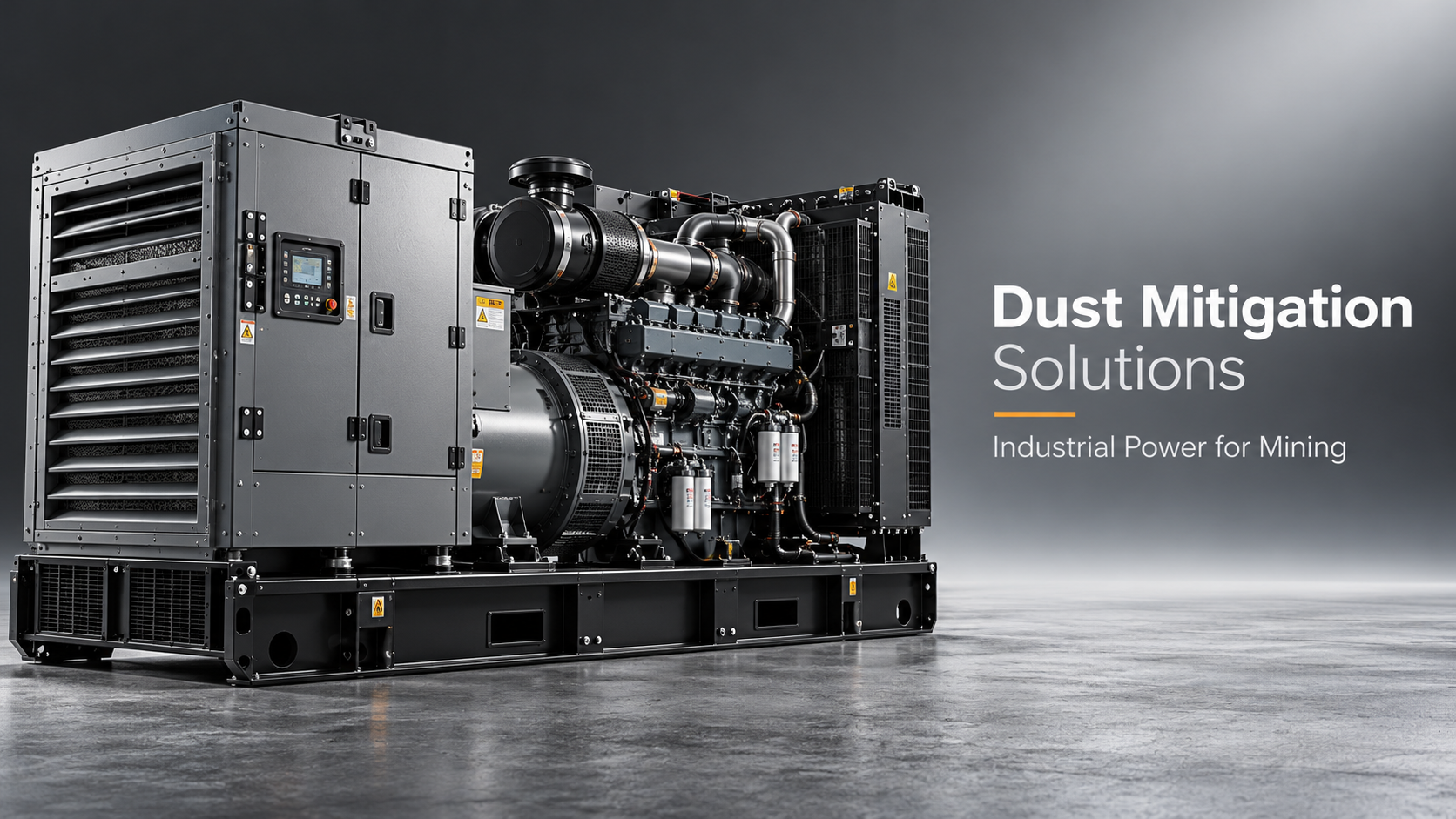
In harsh mining environments, airborne dust poses severe safety and operational risks for quality control and safety personnel. Selecting the right industrial generator set for mining operations is crucial to mitigate these hazards effectively. By integrating advanced filtration systems and robust enclosures, modern power equipment not only ensures reliable backup energy but also minimizes dust accumulation and explosion risks. Discover how to optimize your site's safety and compliance by implementing strategic dust mitigation measures with your power solutions.
Understanding the Mechanical and Electrical Threats of Airborne Dust
Dust in a mining context is not merely a cosmetic issue; it is an aggressive contaminant that attacks power systems on multiple fronts. For safety and quality control managers, the primary concern is that fine particulate matter—whether it is silica, coal dust, or metallic ore residue—acts as a thermal insulator and an electrical conductor under certain conditions.
When dust infiltrates the radiator core of a diesel generator, it restricts airflow and drastically reduces cooling efficiency. This leads to elevated operating temperatures, which can trigger engine derating or, in worst-case scenarios, catastrophic overheating during a critical grid failure. Beyond thermal management, conductive dust can settle on control panels, automatic transfer switches (ATS), and alternator windings. If moisture is present, this creates a pathway for tracking currents, leading to short circuits and ground faults.
Perhaps the most severe risk involves combustible dust environments. In coal mining or certain mineral processing facilities, airborne dust can reach explosive concentrations. A standard generator set with hot exhaust surfaces or internal electrical arcing can act as an ignition source. Therefore, mitigating dust risks is not just about protecting the equipment; it is about preventing the power system from becoming a catalyst for a site-wide safety incident.
Enclosure Design and Positive Pressure Filtration
The physical barrier between the generator components and the mining environment is your first line of defense. While standard silent enclosures are designed primarily for noise attenuation, an industrial generator set for mining operations requires enclosures engineered specifically for particulate exclusion.
Standard weatherproof enclosures often rely on simple foam seals that degrade quickly under UV exposure and vibration. In mining applications, safety managers should specify enclosures with labyrinth seals and heavy-duty rubber gaskets around all access doors. More importantly, the ventilation design must incorporate multi-stage filtration. A primary pre-filter captures large debris and coarse dust, extending the life of the secondary high-efficiency filters that protect the engine air intake and internal cooling fans.
For environments with highly abrasive or combustible dust, implementing a positive pressure ventilation system inside the enclosure is a highly effective strategy. By using filtered intake fans to maintain a slightly higher air pressure inside the canopy than outside, any minor gaps in the enclosure seals will push air out rather than pulling dust in. This significantly reduces the accumulation of dust on the alternator and control panels, maintaining electrical integrity and reducing the frequency of manual cleaning.
Component Selection: Radiators and Alternators
Even with a good enclosure, dust will eventually find a way in, or the system may need to operate with open doors during extreme heat conditions. This makes the intrinsic design of the core components critical.
Radiator selection should prioritize ease of cleaning and resistance to clogging. Standard automotive-style radiators with tightly spaced fins will blind off quickly in a dusty mine. Instead, specify industrial radiators with wider fin spacing and deeper cores. While this might require a slightly larger physical footprint, it allows dust to pass through or be easily cleared with low-pressure air or water, maintaining cooling capacity. Reversible cooling fans can also be a valuable addition, allowing operators to periodically blow dust out of the core from the inside.
The alternator is equally vulnerable. Standard IP23 alternators are generally insufficient for high-dust mining environments. Safety specifications should mandate alternators with at least an IP44 rating, or ideally IP23 units that have been treated with specialized anti-condensation heaters and epoxy dip-and-bake windings. The epoxy coating seals the copper windings, preventing dust and moisture from penetrating the insulation and causing turn-to-turn shorts. Additionally, specifying brushless designs with enclosed exciter systems minimizes the generation of carbon dust internally, which can otherwise mix with external silica dust to create a highly conductive sludge.
Strategic Maintenance and Monitoring Protocols
Engineering controls must be paired with rigorous operational protocols. Quality control personnel should establish maintenance routines that specifically address dust accumulation, rather than relying solely on standard hourly service intervals.
One common mistake in dusty environments is using high-pressure compressed air to clean the generator. This often blows fine dust deeper into sealed electrical compartments or creates a temporary but dangerous dust cloud around the equipment. Maintenance teams should be trained to use industrial vacuum systems with HEPA filters for internal cleaning, and low-pressure water washing for external radiator cores, ensuring the equipment is fully dry before re-energizing.
Implementing condition-based monitoring can also preempt dust-related failures. Installing differential pressure gauges across air filters allows operators to replace filters based on actual restriction rather than a fixed calendar schedule, optimizing costs and ensuring engine protection. Furthermore, routine thermal imaging of the alternator windings, control panels, and exhaust manifolds during operation can identify hot spots caused by dust insulation before they lead to component failure or ignition risks.
Partnering with the Right Manufacturer for Customized Solutions
When sourcing an industrial generator set for mining operations, the gap between a standard catalog model and a site-ready unit is often defined by the manufacturer's engineering flexibility. Off-the-shelf units rarely survive extreme mining conditions without significant modifications, and retrofitting dust mitigation features after delivery is both costly and less effective.
As a source manufacturer in Foshan, Guangdong Yundong Diesel Generator (EPOWER) understands this dynamic. We specialize in 20-3000KW diesel generator sets, integrating premium brand units from Cummins, Perkins, Mercedes Benz, Mitsubishi, Yuchai, Weichai, and Scania. However, the engine is only the heart of the system; the enclosure and ancillary components dictate its survival in a mine. That is why our facilities are equipped to produce open, silent, high-voltage, gas, and energy storage power equipment specifically adapted for backup power supply in mines, alongside hospitals, data centers, and factories.
By supporting customized exports and providing one-stop power supply solutions, we allow safety and quality teams to specify exact dust-mitigation features at the design stage. Whether you need positive pressure enclosures, specialized epoxy-treated alternators, or wide-spaced radiators for a specific mineral dust profile, these requirements can be engineered directly into the manufacturing process. This proactive approach ensures that the power equipment arrives on-site not just as a backup power source, but as a fully integrated component of your mine's safety and environmental control strategy.
Defining Your Site-Specific Mitigation Strategy
Mitigating dust risks is not a one-size-fits-all exercise. The specific composition of the dust in your mining operation—whether it is abrasive, conductive, or combustible—will dictate the exact specifications required for your backup power systems. Safety and quality control managers should begin by conducting a thorough hazard analysis of the installation site, identifying the particulate size, concentration, and explosive limits if applicable.
Once the environmental parameters are defined, the next step is to translate these into technical specifications for your power equipment. This involves moving beyond basic kilowatt ratings and focusing on IP ratings, filtration efficiencies, enclosure seal types, and maintenance access designs. Engaging with a manufacturer early in the procurement process to review these specific site conditions will ensure that the final industrial generator set for mining operations is robust, compliant, and capable of delivering reliable power when the grid fails, without introducing new risks into the mining environment.
Specialized field of steel wire ropes
24/7 before-sales and after-sales services
Comprehensive technical support