



Is EPOWER silent generator for hospital use quiet enough for operating rooms?
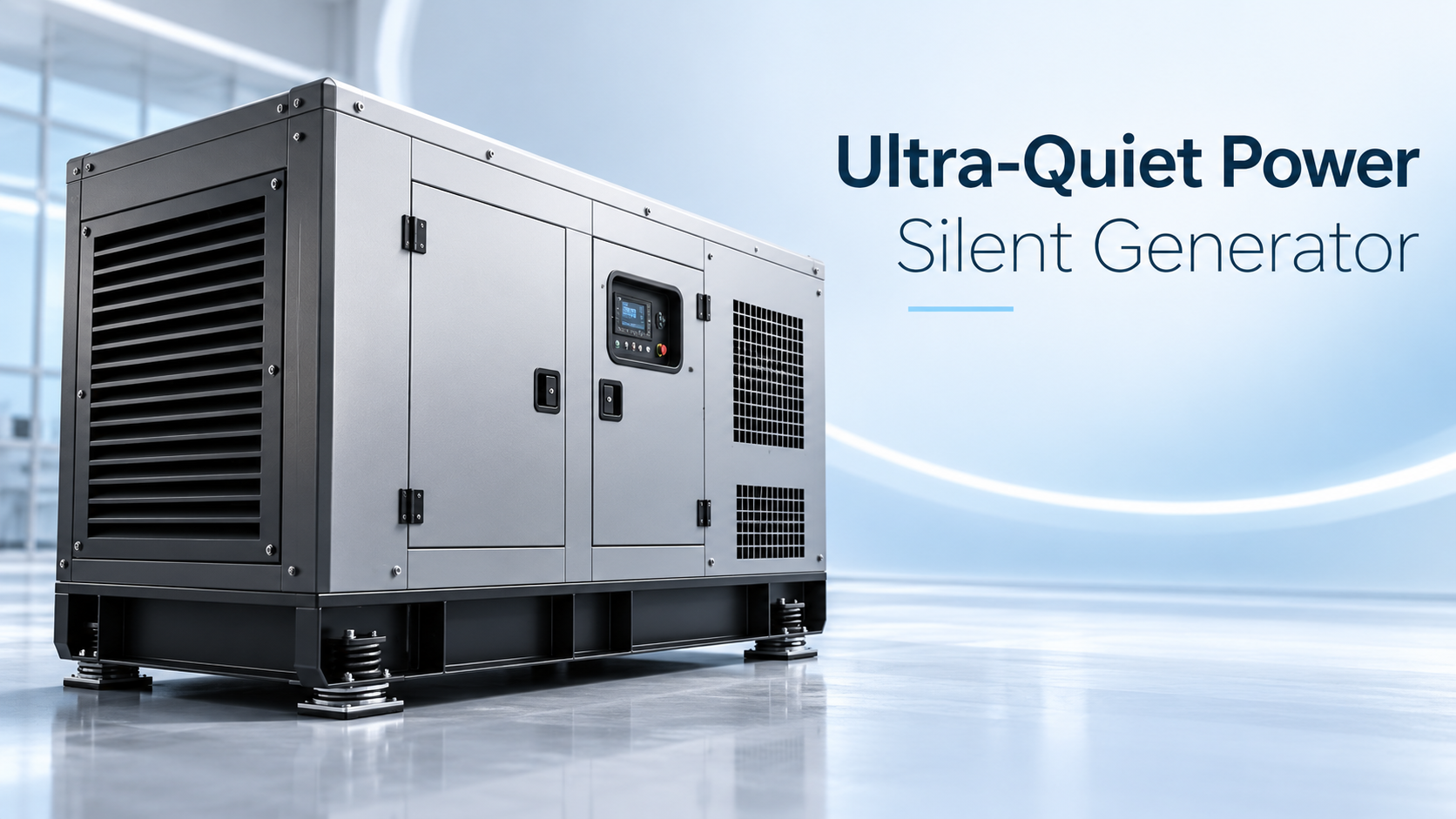
When selecting backup power for critical healthcare facilities, noise reduction is a top priority. You might wonder, is the EPOWER silent generator for hospital use quiet enough for sensitive environments like operating rooms? The direct answer is yes. Designed with advanced acoustic enclosures and vibration-dampening technology, EPOWER silent generators deliver reliable, ultra-quiet power that meets the stringent acoustic requirements of modern surgical suites. However, determining if a generator is truly quiet enough requires looking beyond basic decibel ratings and understanding how noise behaves in a complex hospital environment.
Understanding the Acoustic Demands of Operating Rooms
Operating rooms are not just looking for general quietness; they require strict control over both airborne noise and structure-borne vibration. The ambient noise level in an operating theater typically needs to remain below 45 to 50 dBA to ensure clear communication among surgical teams and to prevent interference with sensitive audio monitoring equipment. More importantly, operating microscopes, laser surgical tools, and delicate robotic arms are highly susceptible to low-frequency vibrations. If a backup generator transmits even minor structural vibrations through the building's foundation or walls, it can cause microscopic blurring in surgical fields or disrupt the calibration of precision instruments. Therefore, the evaluation of an EPOWER silent generator for hospital use must focus on its ability to eliminate both high-frequency mechanical clatter and low-frequency resonant hums.
How EPOWER Silent Generators Achieve Ultra-Low Noise Levels
Achieving the necessary acoustic performance for a hospital setting involves a multi-layered engineering approach. EPOWER addresses the primary noise sources of a diesel engine—mechanical impact, exhaust pulses, and cooling fan aerodynamics—through specific design modifications.
Multi-Layer Acoustic Enclosures
The standard open-frame generator is entirely unsuitable for hospital rooftops or adjacent courtyards. EPOWER utilizes specialized acoustic enclosures constructed with a double-wall design. The outer wall, typically made of galvanized and powder-coated steel, provides structural integrity and reflects high-frequency noise. The inner wall is lined with high-density, fire-retardant acoustic foam, which is a mandatory requirement for healthcare facilities to meet strict fire safety codes. Between these walls, an air gap acts as an additional acoustic buffer. This composite structure effectively traps and dissipates sound waves generated by the engine block and the alternator, preventing them from escaping into the surrounding environment.
Advanced Vibration-Dampening Technology
Noise is often the audible result of vibration. To prevent the engine's mechanical vibrations from transferring to the generator canopy or the building structure, EPOWER employs heavy-duty anti-vibration mounts. These mounts are strategically placed between the engine-alternator base and the silent canopy frame. By decoupling the power source from the enclosure, the system prevents structure-borne noise. For hospital installations where the generator might be located on an upper floor or a basement level, this vibration isolation is critical to ensure that the physical shaking does not travel through the concrete slabs and into the operating rooms below or above. Additionally, the internal fuel tank is integrated with the same dampening principles to prevent fuel sloshing from adding to the vibrational noise profile.
Customized Exhaust and Intake Silencing
The exhaust system and the engine air intake are major pathways for low-frequency noise. EPOWER integrates hospital-grade silencers directly into the exhaust routing. These are impedance composite silencers designed to cancel out specific sound frequencies produced by the engine's exhaust pulses without creating excessive backpressure, which could affect engine performance. Similarly, the air intake pathways are fitted with acoustic baffles that allow sufficient airflow for combustion while blocking the escape of engine noise.
Evaluating Installation Scenarios and Distance Attenuation
A generator's noise level is highly dependent on its physical location relative to the sensitive areas it serves. Procurement personnel must evaluate the EPOWER silent generator for hospital use based on the specific installation site and architectural layout.
Outdoor and Rooftop Installations
If the generator is installed outdoors or on the hospital roof, sound attenuation over distance plays a significant role. Sound pressure levels drop by approximately 6 dBA for every doubling of distance in a free field. An EPOWER silent generator rated at 75 dBA at 1 meter will measure significantly lower at the facade of the hospital building. However, rooftop installations require careful consideration of wind direction and potential sound reflection from adjacent taller buildings, which can bounce noise back toward patient wards or operating theaters. In such cases, directing the exhaust and cooling airflow away from sensitive zones is a necessary part of the layout planning.
Basement and Indoor Installations
When space constraints require the generator to be installed indoors, such as in a basement, the acoustic enclosure alone is not enough. The room itself must be treated as an acoustic chamber. The walls and ceiling of the generator room need to be lined with acoustic panels, and the doors must be heavy, sound-rated fire doors. Furthermore, the ventilation louvers required for engine cooling and room ventilation become weak points for noise leakage. EPOWER provides customized power solutions that include designing specialized acoustic louvers and ductwork, ensuring that the necessary cooling air can enter and exit the room without allowing engine noise to escape into the hospital corridors.
Managing Load Transients and Cooling Fan Noise
A common oversight in generator selection is focusing only on the steady-state noise level. In a hospital, a power failure might trigger the simultaneous startup of large HVAC systems, elevators, and heavy medical imaging equipment. This sudden application of a heavy block load causes the diesel engine to work harder, temporarily increasing exhaust and mechanical noise.
EPOWER generators are equipped with advanced digital control panels and electronic governors that manage engine speed and fuel delivery smoothly during these load transients. By preventing sudden RPM spikes and harsh combustion knock, the system keeps transient noise levels within acceptable limits. Additionally, the cooling fans are a continuous source of aerodynamic noise. EPOWER optimizes the fan blade design and the internal airflow pathways within the canopy to minimize turbulence. For larger capacity units in the 1000kW to 3000kW range, the cooling systems are often split or remotely mounted, allowing the noisy radiator fans to be placed far away from the operating rooms, further reducing the acoustic footprint near critical care areas.
Long-Term Noise Maintenance and Degradation
A silent generator is only as quiet as its maintenance allows. Over years of operation, the acoustic performance of any canopy can degrade if not properly maintained. The rubber seals around the canopy doors can harden, crack, or compress, creating gaps for noise to leak out. Hinges and door latches can loosen due to engine vibration, causing the steel panels to rattle. Furthermore, in environments with high humidity or where oil mist is present, the internal acoustic foam can degrade or lose its sound-absorbing properties over time.
When specifying the EPOWER silent generator for hospital use, it is important to consider the long-term maintainability of the acoustic features. EPOWER designs its enclosures with accessible maintenance points and uses high-quality, weather-resistant sealing materials that retain their elasticity over time. Establishing a routine maintenance schedule that includes inspecting and replacing worn acoustic seals, tightening canopy hardware, and checking the condition of the internal sound-absorbing foam is essential to ensure the operating rooms remain undisturbed throughout the generator's lifespan.
Final Selection Considerations for Procurement
To confidently determine if the generator will meet the hospital's strict requirements, procurement personnel should request comprehensive acoustic test reports from the manufacturer. These reports should detail the noise levels at various distances and under different load conditions, measured in dBA. It is highly advisable to conduct a site-specific acoustic assessment before finalizing the purchase. By combining the manufacturer's technical data with the hospital's architectural layout, facility managers can accurately predict the actual noise impact on the operating rooms. EPOWER's capability to provide customized power solutions ensures that the generator is configured to integrate seamlessly and quietly into the hospital's critical infrastructure, providing peace of mind for both the surgical teams and the patients.
Specialized field of steel wire ropes
24/7 before-sales and after-sales services
Comprehensive technical support