



Is an EPOWER Silent Generator Suitable for Hospital Use
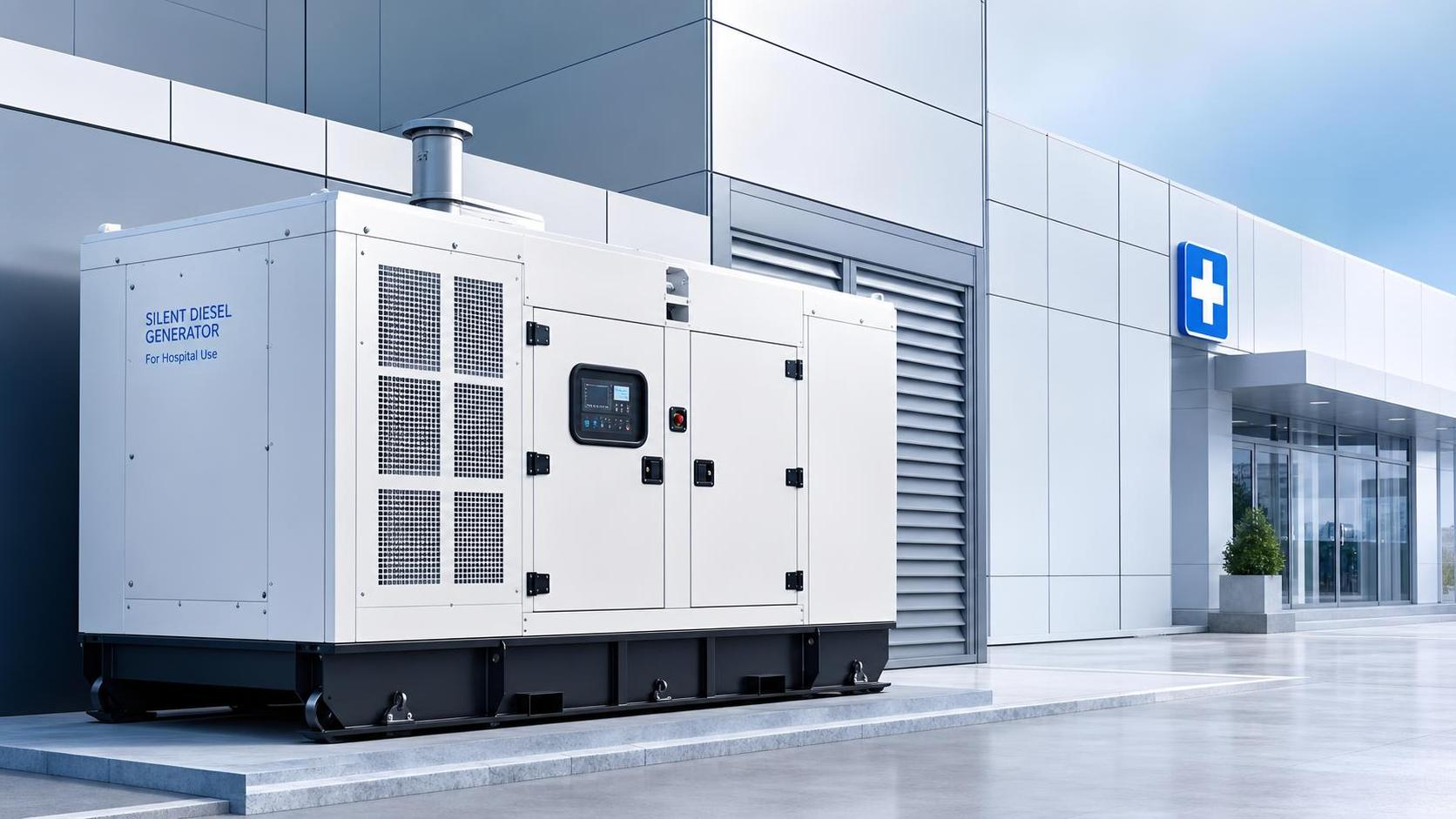
When reliable backup power can directly affect patient safety, choosing the right generator becomes critical. An EPOWER silent generator for hospital use is designed to combine stable performance, low noise, and flexible power solutions for sensitive medical environments. From emergency rooms to data systems, it offers a practical option for hospitals that need dependable standby power without disrupting daily operations.
For hospital administrators, engineering teams, contractors, and procurement managers, the real question is not only whether a generator can start during an outage, but whether it can support life safety loads, critical medical systems, and essential building services under strict operating conditions.
A hospital backup power project often involves 24/7 reliability expectations, controlled acoustic performance, fuel planning, load prioritization, and installation constraints. In this context, an EPOWER silent generator for hospital use can be a strong option when selected with the right rating, enclosure, and control configuration.
Why Hospitals Need Silent and Stable Backup Power
Hospitals are unlike ordinary commercial buildings. A power interruption lasting even 10 to 30 seconds can affect ICU devices, operating rooms, laboratory storage, data systems, elevators, and negative pressure ventilation in key departments.
Most hospital power systems divide loads into at least 2 to 3 levels: life safety, critical care, and equipment or facility support. A standby generator must respond quickly and remain stable under changing load conditions.
Noise control matters in medical environments
A silent generator is especially relevant in hospitals because noise can disturb patient rest, clinical communication, and staff concentration. Compared with open-type units, silent models are typically equipped with acoustic enclosures, internal sound-absorbing materials, and optimized airflow paths.
In practical projects, buyers often compare noise levels at 7 meters, such as 68 dB to 85 dB depending on power range, enclosure design, ambient conditions, and exhaust silencing specification. Lower noise is not only about comfort but also about site compliance.
Stable voltage and frequency are critical
Hospital loads include imaging support systems, pumps, communication racks, UPS charging circuits, and surgical support equipment. These applications require steady voltage and frequency, often within common standby tolerances such as ±1% voltage regulation and close control around 50Hz or 60Hz output.
An EPOWER silent generator for hospital use can be configured around established engine options such as Cummins, Perkins, Mitsubishi, Mercedes Benz, Yuchai, Weichai, or Scania, allowing project teams to match output, fuel efficiency, and service preference to site needs.
Typical hospital loads supported by standby generators
- Emergency lighting and exit systems
- Operating room support circuits
- ICU and patient monitoring systems
- Medical gas compressors and pumps
- Water supply, fire pumps, and lift systems
- Server rooms, HIS systems, and communication networks
The table below shows how hospital backup power demands differ from general industrial or commercial applications, helping buyers understand why a silent standby set needs a more careful specification process.
The key takeaway is that hospital projects prioritize continuity, acoustic performance, and controlled power quality at the same time. That is why a standard commercial backup set may not be enough without medical-site-focused planning.
Is an EPOWER Silent Generator Suitable for Hospital Use
In many cases, yes. An EPOWER silent generator for hospital use can be suitable when the generator is properly sized, uses a dependable engine and alternator combination, and is integrated with the hospital’s transfer switch, distribution system, and load management plan.
Guangdong Yundong Diesel Generator, the manufacturer behind EPOWER, focuses on 20KW to 3000KW diesel generator sets and also provides open, silent, high-voltage, gas, and energy storage power equipment. This product range is useful because hospitals vary widely, from small clinics needing 80KW to 200KW backup to regional medical campuses requiring multiple units or higher-capacity solutions.
Power range and customization flexibility
A hospital does not buy a generator based on nameplate size alone. It buys a power solution based on actual demand, step loading, future expansion, and installation limits. EPOWER’s 20KW to 3000KW range gives room for different project scales and phased deployment.
For example, a community clinic may only need essential backup for lighting, refrigeration, small HVAC support, and information systems. A larger hospital may need to coordinate multiple standby sources, automatic transfer, synchronization, and compartmentalized load shedding.
Brand engine options help match local preference
Some buyers prefer globally recognized engine platforms for familiar maintenance routines and regional spare parts availability. EPOWER supports engine options such as Cummins, Perkins, Mercedes Benz, Mitsubishi, Yuchai, Weichai, and Scania, which allows procurement teams to align technical and commercial priorities.
This flexibility can reduce friction during specification review, especially in export projects where the contractor, consultant, and owner may each have different brand preferences or fuel efficiency targets.
What makes a silent generator hospital-ready
- Correct standby rating with 10% to 20% reserve for critical expansion
- Stable AVR and governor performance under motor starting loads
- Acoustic enclosure suited to nearby patient or office areas
- Reliable ATS compatibility and remote monitoring support
- Accessible maintenance layout for filters, coolant, and service points
Suitability therefore depends less on a single brand label and more on whether the final configuration is engineered for medical use. A well-matched EPOWER silent generator for hospital use can meet that requirement when technical details are addressed upfront.
How to Select the Right Generator Size and Configuration
Sizing errors are one of the most common reasons for poor standby performance. Undersized units may struggle during motor starting or simultaneous load pickup, while oversized units can run inefficiently at very low load ratios over long periods.
For hospital projects, buyers usually evaluate at least 4 core factors: total critical load, largest motor starting demand, expected runtime, and acoustic or space constraints. These factors shape the final rating and enclosure choice.
Start with critical load mapping
Instead of calculating every building circuit as backup load, hospitals should identify the essential load list first. This may include emergency lighting, ICU areas, selected HVAC zones, pumps, IT rooms, and medical support systems.
A practical engineering review often includes 3 steps: collect actual load data, separate continuous and intermittent loads, and estimate startup current for motors or compressors. This process gives a more realistic basis than using rough floor-area assumptions.
Consider reserve margin and future expansion
Many hospital buyers add a reserve of around 10% to 25% depending on future equipment plans. This does not mean blindly choosing the biggest unit. It means selecting a standby solution that can absorb moderate growth without compromising fuel efficiency or space planning.
If the site expects expansion in the next 2 to 5 years, parallel-capable design or modular deployment may be more cost-effective than installing one oversized machine today.
The following table outlines common hospital scenarios and a practical way to think about generator selection without assuming a single universal answer.
This comparison shows that the right generator is determined by the load profile and system architecture. A silent unit suitable for one hospital wing may not be enough for a full campus-wide emergency supply plan.
Questions buyers should ask before ordering
- What is the actual standby load in kW and kVA?
- What is the highest motor starting current on the emergency bus?
- How many hours of fuel autonomy are required: 8, 12, or 24 hours?
- Will the unit be rooftop, ground-level, or indoors with ducting?
- Is export voltage or frequency customization required?
- Will the project need synchronization or future parallel expansion?
Installation, Compliance, and Operational Risks
A generator can be technically strong and still fail a project if installation planning is weak. Hospital environments require attention to ventilation, exhaust routing, vibration control, fuel safety, access for maintenance, and electrical coordination.
In many projects, at least 5 risk points should be checked before final approval: site noise limits, cable route length, cooling airflow, fuel storage arrangement, and emergency transfer logic. Missing any one of these can increase commissioning delays.
Acoustic and ventilation balance
Silent generators reduce noise, but they still need enough airflow for cooling and combustion. If the room or enclosure is too restrictive, engine temperature can rise, especially in hot climates where ambient temperature may exceed 35°C to 40°C.
For indoor generator rooms, project teams should assess intake and discharge airflow paths, radiator heat rejection, and silencer back pressure. A low-noise system that overheats under load is not suitable for hospital standby duty.
Fuel and maintenance planning
Hospitals often expect long-duration support during grid instability, storms, or regional outages. That is why fuel storage and replenishment procedures matter as much as engine quality. Runtime planning commonly targets 8 to 24 hours depending on local regulation and risk tolerance.
Maintenance access should also be practical. Service teams need room to replace filters, inspect belts, check coolant, and perform load testing. If access panels cannot open fully or the set is blocked by walls or piping, service efficiency drops significantly.
Common mistakes in hospital generator projects
- Choosing by price only without confirming standby load profile
- Ignoring exhaust direction near wards or air intakes
- Underestimating startup current of chillers or pump motors
- Using a silent enclosure without proper cooling calculation
- Skipping regular test runs and fuel quality checks
These issues are avoidable when the manufacturer, contractor, and hospital engineering team review the application together before production and shipment. This is especially important for customized export projects where voltage, frequency, and enclosure details vary by market.
Why Buyers Consider EPOWER for Hospital Backup Projects
An important advantage of working with a source manufacturer is that the project can be adapted to real application needs instead of forcing the buyer into a one-size-fits-all package. For hospital projects, this matters because load profiles, local standards, and installation limits differ widely.
Guangdong Yundong Diesel Generator in Foshan provides one-stop power supply solutions covering diesel generator sets from 20KW to 3000KW as well as silent, open, high-voltage, gas, and energy storage related equipment. This broader scope helps when a hospital project requires more than a basic genset.
Export and customization value for B2B buyers
For international buyers, customization can include frequency selection, enclosure type, control interface, fuel tank arrangement, and brand preference. This is useful for EPC firms, medical infrastructure contractors, distributors, and institutional procurement teams serving different regions.
A typical project review may involve 4 stages: demand confirmation, technical proposal, production and inspection, and shipment support. This structured approach can reduce mismatch risk during delivery and commissioning.
Service thinking beyond the machine itself
In hospital backup power, the value is not limited to the generator hardware. Buyers also evaluate response speed, parts support, documentation clarity, and whether the supplier can help align the set with transfer switches, load conditions, and site constraints.
An EPOWER silent generator for hospital use becomes more attractive when the supplier can discuss noise targets, expected runtime, installation environment, and future load growth in practical terms rather than only quoting a model and price.
Who this solution is most suitable for
- Hospitals planning new standby power systems
- Medical campuses upgrading old diesel backup units
- EPC contractors handling hospital infrastructure projects
- Distributors looking for customizable export generator supply
- Facilities needing lower noise backup near occupied buildings
If the project requires dependable standby power, reduced noise, flexible engine choices, and application-based configuration, EPOWER is a practical manufacturer to evaluate.
Practical Buying Advice Before You Request a Quote
Before requesting pricing, prepare a clear project brief. This should include required kW or kVA, voltage and frequency, installation location, expected runtime, noise target, and whether the unit will serve a single building or a multi-branch emergency network.
The more complete your information, the more accurate the recommendation will be. This saves time during the first 7 to 15 days of project discussion and helps avoid later changes in enclosure, tank, cable routing, or control specification.
Prepare these 6 key details
- Total critical backup load and major motor loads
- Required standby duration and fuel autonomy
- Site layout, ventilation condition, and acoustic restrictions
- Preferred engine brand or approved vendor list
- Local electrical standard, frequency, and transfer method
- Future expansion plan within the next 2 to 5 years
Ask for solution-based communication
Instead of asking only for a low price, request a solution outline. A useful quotation discussion should address standby rating, enclosure performance, alternator specification, control functions, fuel arrangement, and delivery scope.
That approach makes it easier to compare suppliers fairly and identify whether a proposed EPOWER silent generator for hospital use is truly aligned with the project’s medical environment and risk profile.
For hospitals, backup power is not a routine equipment purchase. It is a reliability decision tied to patient safety, operational continuity, and facility resilience. A properly configured EPOWER silent generator for hospital use can provide the low-noise, stable, and customizable standby support many medical sites require.
With generator options from 20KW to 3000KW, multiple engine brands, silent and specialized power equipment, and export-oriented customization, EPOWER offers a practical path for clinics, hospitals, contractors, and distributors seeking dependable standby solutions. Contact us today to get a tailored hospital generator proposal, discuss technical details, or learn more about complete backup power solutions.
Specialized field of steel wire ropes
24/7 before-sales and after-sales services
Comprehensive technical support