



Is it safe to run a diesel generator set indoors without exhaust ventilation?
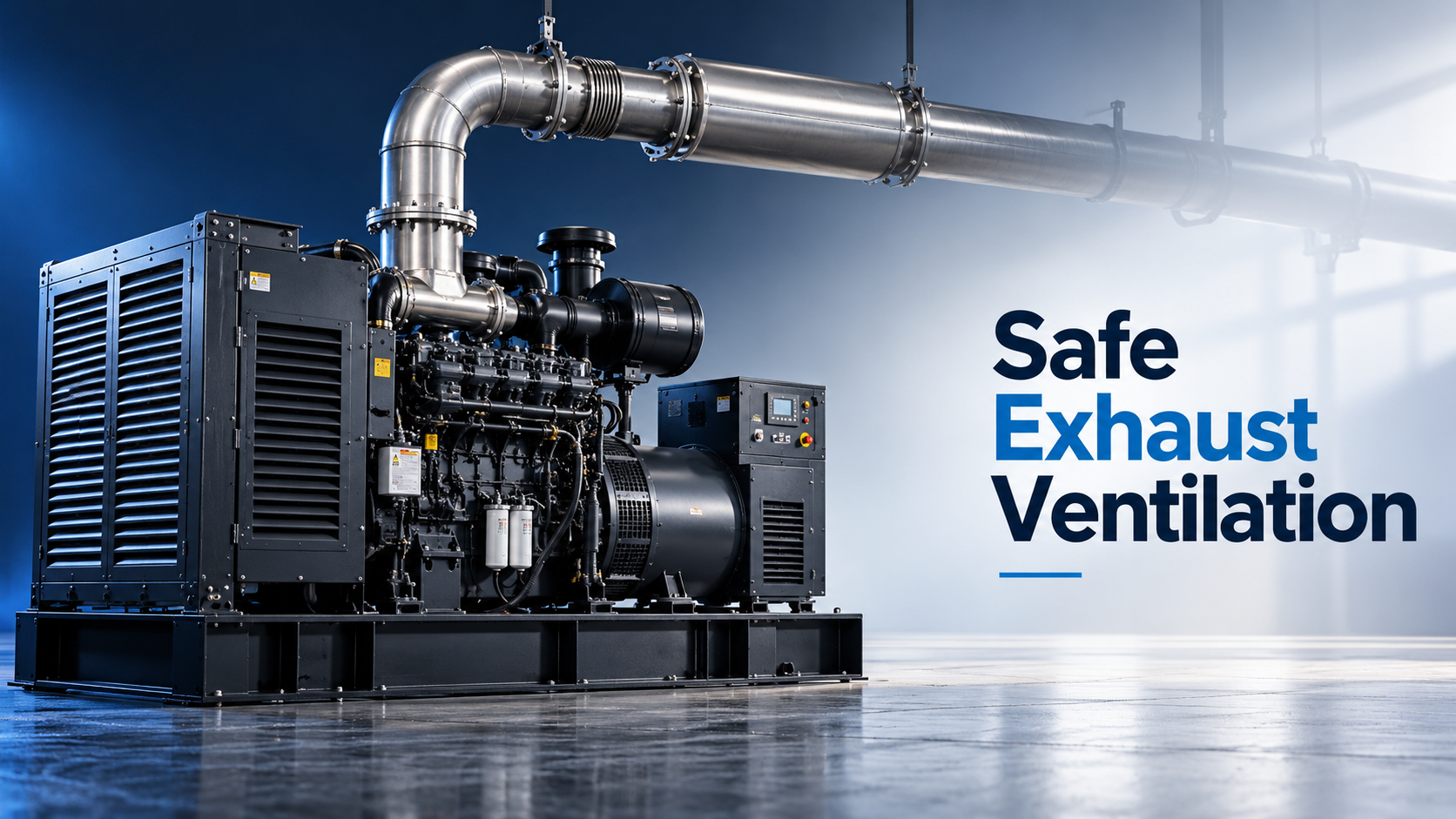
When facility managers or operators evaluate backup power layouts, a critical question often arises: is it safe to run a diesel generator set indoors without exhaust ventilation? The definitive and non-negotiable answer is no. Operating a diesel engine in an enclosed space without dedicated, engineered exhaust ventilation is extremely hazardous. It introduces immediate threats to human life through toxic gas accumulation and creates severe operational risks for the equipment itself. Understanding the physical and chemical realities of diesel combustion inside a confined area is the first step in preventing catastrophic failures and ensuring continuous, safe power generation.
Diesel engines are essentially large air pumps that consume massive volumes of oxygen to burn fuel. When placed indoors without proper airflow, the environment quickly becomes hostile. The primary concern is the rapid buildup of carbon monoxide (CO), a colorless, odorless, and highly toxic gas. Even a minor leak in the exhaust system or inadequate ambient ventilation can lead to lethal CO concentrations within minutes. Beyond CO, exhaust gases contain nitrogen oxides, particulate matter, and unburned hydrocarbons, all of which degrade indoor air quality and pose severe health risks to personnel working in or near the generator room.
The Mechanics of Toxic Gas Accumulation
Carbon monoxide binds to hemoglobin in the blood much more effectively than oxygen, leading to rapid asphyxiation at the cellular level. In a sealed or poorly ventilated room, the concentration of CO can reach dangerous thresholds long before the smell of diesel exhaust becomes noticeable. Relying on natural drafts, open windows, or standard building HVAC systems is entirely insufficient to mitigate this risk. HVAC systems are not designed to handle the volume and toxicity of diesel exhaust, and running them during a generator event can actually pull exhaust gases into other occupied zones of the building, spreading the hazard.
Furthermore, the exhaust system itself must be meticulously maintained. High-pressure exhaust pulses can cause micro-fractures in poorly welded pipes or degrade gaskets over time. If the exhaust piping is not completely sealed and routed directly to the outside atmosphere, toxic gases will bleed into the generator room. This makes the physical integrity of the exhaust pathway just as critical as the ventilation capacity of the room.
Thermal Dynamics and Equipment Degradation
Beyond the toxicity of the exhaust, the thermal output of a diesel generator presents a massive engineering challenge in an enclosed space. A diesel engine converts only a fraction of the fuel's chemical energy into usable electricity; the remainder is released as waste heat. This heat is transferred to the engine block, the lubricating oil, the coolant, and the ambient air passing through the radiator.
In an indoor environment without adequate exhaust ventilation, this waste heat has nowhere to go. The ambient temperature in the room will rise rapidly, often exceeding the design limits of the equipment. As the intake air temperature increases, the air becomes less dense. Less dense air means less oxygen mass entering the combustion chamber, which directly reduces engine efficiency and power output. The engine will begin to run hotter, creating a vicious cycle of thermal runaway.
Simultaneously, the radiator requires a massive volume of cool air to dissipate heat from the coolant. If the hot exhaust air from the engine is recirculated into the radiator intake, the cooling system loses its effectiveness. The coolant temperature will spike, triggering high-temperature alarms and eventually forcing the generator to shut down to prevent catastrophic mechanical failure. In extreme cases, the accumulated heat can ignite nearby combustible materials or degrade the insulation on electrical wiring, creating a severe fire hazard.
Oxygen Starvation and the Combustion Cycle
Combustion requires a precise ratio of fuel to oxygen. A large diesel generator operating at full load can consume thousands of cubic feet of air per minute. In a confined indoor space without a dedicated makeup air supply, the engine will quickly begin to starve for oxygen. As the oxygen concentration drops, the combustion process becomes incomplete.
Incomplete combustion leads to a significant increase in soot, carbon monoxide, and unburned fuel deposits inside the combustion chamber. This not only accelerates engine wear and fouls the injectors but also dramatically increases the volume of toxic emissions. The generator will lose power, run roughly, and emit thick, black smoke, further compromising the already dangerous indoor environment. Ensuring a continuous, unrestricted supply of fresh air is just as vital as extracting the exhaust.
Engineering a Safe Indoor Generator Environment
If site constraints absolutely dictate that a generator must be installed indoors, the facility must be engineered to handle the extreme aerodynamic and thermal loads. This is not a matter of simply adding a few exhaust fans; it requires a comprehensive ventilation design.
- Separation of Intake and Exhaust: Fresh air louvers and exhaust discharge points must be located on opposite sides of the building or sufficiently far apart to prevent short-circuiting, where exhaust gases are immediately sucked back into the air intake.
- Calculated Airflow Volume: The ventilation system must be sized to handle both the combustion air required by the engine and the cooling air required by the radiator. This often involves calculating the total cubic feet per minute needed and ensuring the louvers and ductwork offer minimal static pressure resistance.
- Exhaust Routing and Insulation: The exhaust pipe must be routed directly outdoors with as few bends as possible to minimize backpressure. Additionally, the piping must be heavily insulated to protect personnel from burns and to reduce radiant heat transfer into the generator room.
- Pressure Management: The room must be slightly pressurized with fresh air to ensure that any minor exhaust leaks are pushed outward rather than allowing gases to seep into adjacent building spaces.
Evaluating Alternative Configurations for Space-Constrained Sites
Designing and maintaining a fully compliant indoor generator room is expensive and space-intensive. For many facilities, the structural modifications required to achieve safe indoor operation are simply not feasible. In these scenarios, rethinking the physical placement and configuration of the power equipment is the most reliable path to safety.
Guangdong Yundong Diesel Generator (EPOWER) addresses these spatial and safety challenges by manufacturing 20-3000KW diesel generator sets tailored to specific site requirements. When indoor installation is compromised by ventilation limits, utilizing advanced silent type enclosures allows for safer outdoor or semi-enclosed placement. These enclosures are acoustically and thermally engineered to manage heat dissipation and noise reduction effectively, making them ideal for noise-sensitive environments like hospitals, data centers, and urban factories.
By integrating premium brand units such as Cummins, Perkins, Mercedes Benz, Mitsubishi, Yuchai, Weichai, or Scania, EPOWER ensures that the core power generation component delivers optimal combustion efficiency. This reliability is crucial when pairing the generator with external ventilation or enclosure designs, as consistent engine performance minimizes unexpected emission spikes and thermal anomalies. Whether the application requires open frame configurations for well-ventilated industrial sheds, high-voltage setups for large-scale grids, or energy storage integrations for hybrid microgrids, selecting the right physical configuration eliminates the need to force an unsafe indoor installation.
Mandatory Safety Protocols and Continuous Monitoring
Even with a perfectly engineered ventilation system, relying solely on mechanical airflow is a single point of failure. Operators must implement redundant safety protocols to protect personnel and equipment.
Installing industrial-grade carbon monoxide detectors is mandatory. These sensors should be placed at the breathing zone level of maintenance personnel and interconnected with the generator's control panel. If CO levels exceed safe thresholds, the system should trigger an audible alarm and, in critical scenarios, initiate an automatic shutdown of the generator to prevent further gas accumulation.
Temperature monitoring is equally critical. Sensors should be placed in the exhaust duct, the generator room ambient air, and the radiator intake air. Any abnormal temperature rise should alert operators to potential ventilation blockages, such as debris covering outdoor louvers or a failed exhaust fan. Regular maintenance schedules must include thorough inspections of the exhaust piping for leaks, checking the tension on radiator drive belts, and cleaning the radiator cores to ensure unobstructed airflow.
Fire suppression systems designed for electrical and fuel fires must be integrated into the generator room. In the event of a fuel leak or electrical short, the ventilation system should be capable of being shut down to starve the fire of oxygen, while the suppression system activates to contain the hazard.
Operating a diesel generator indoors without exhaust ventilation is a severe violation of basic safety and engineering principles. The risks of carbon monoxide poisoning, thermal runaway, and oxygen starvation cannot be mitigated by makeshift solutions or temporary fixes. Safety must be engineered into the installation from the ground up, whether through rigorous ventilation design, continuous environmental monitoring, or by selecting alternative equipment configurations that align with the physical realities of the site. Prioritizing these protocols ensures that backup power remains a reliable asset rather than a hidden liability.
Specialized field of steel wire ropes
24/7 before-sales and after-sales services
Comprehensive technical support