



What Makes an Industrial Generator Set Suitable for Mining Operations
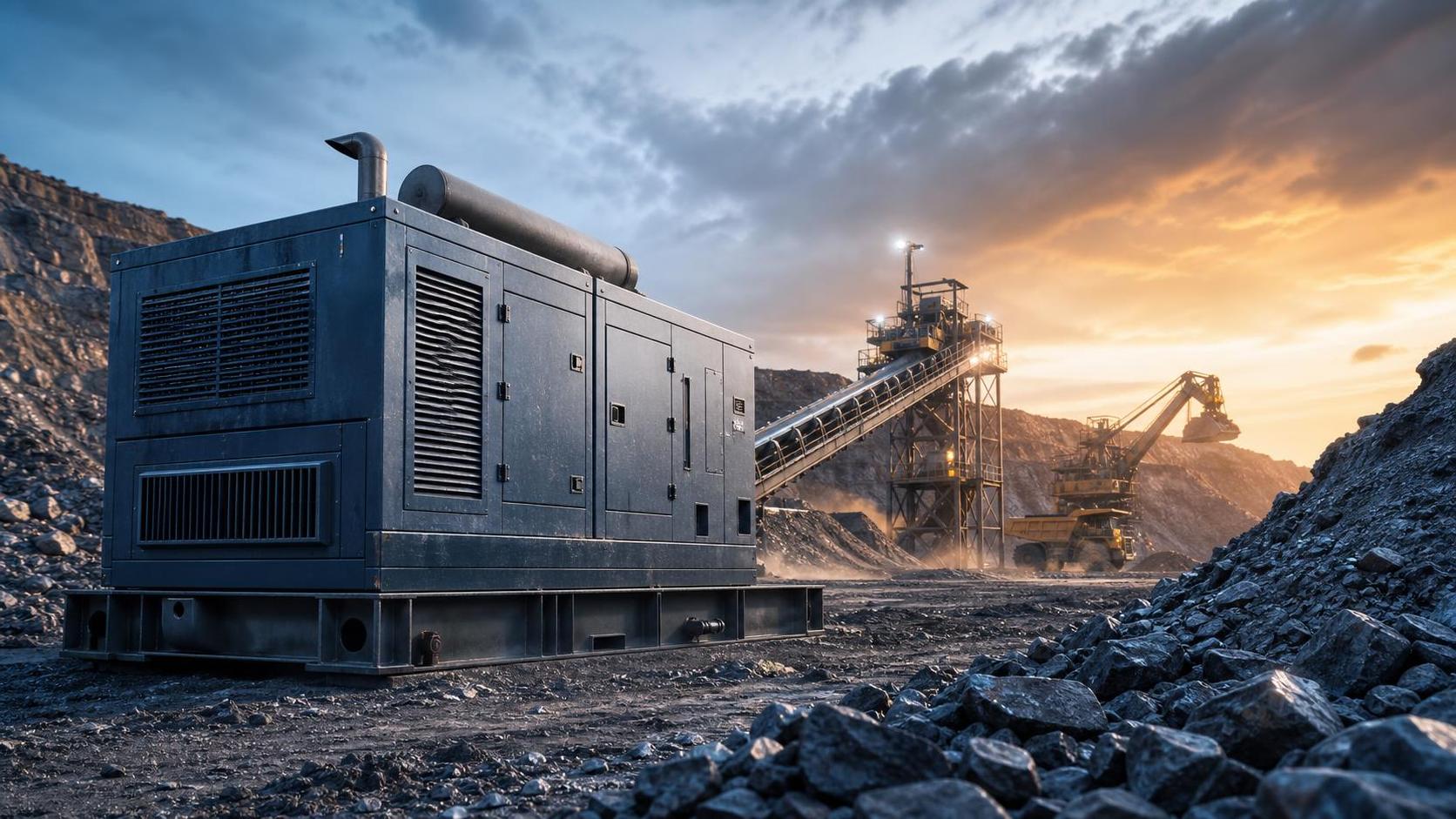
Choosing the right industrial generator set for mining operations is critical to keeping equipment running safely and efficiently in harsh, remote environments. From continuous power output and fuel efficiency to durability, customization, and after-sales support, the ideal solution must match the demanding conditions of modern mining sites. This article explores the key factors that make a generator set truly suitable for mining applications.
For mine owners, EPC contractors, equipment managers, and industrial power buyers, the challenge is rarely just buying a diesel genset. The real task is selecting a power system that can withstand dust, vibration, altitude, heavy starting loads, and long operating hours while maintaining stable output for critical equipment.
An industrial generator set for mining operations must do more than supply standby electricity. In many sites, it supports prime or continuous duty, powers dewatering pumps, crushers, conveyors, ventilation systems, workshops, camps, and emergency circuits, and must remain serviceable even when the nearest city is several hours away.
Manufacturers with broad power ranges and flexible configurations are often better positioned to support mining needs. Guangdong Yundong Diesel Generator (EPOWER), based in Foshan, supplies 20-3000KW diesel generator sets and integrated power equipment, including open, silent, high-voltage, gas, and energy storage solutions for mines and other demanding industrial applications.
Why Mining Sites Demand a Different Generator Standard
Mining environments impose harsher conditions than ordinary commercial backup applications. A hospital backup set may run a few hours during a grid outage, but a mining generator can operate 8-24 hours per day, often in hot, dusty, or high-humidity areas with uneven load profiles and limited service access.
Harsh operating conditions affect generator selection
Open-pit and underground mines present distinct risks. Open-pit locations expose power equipment to direct sun, rain, airborne dust, and ambient temperatures that may range from 0°C to 45°C or higher. Underground applications may involve restricted ventilation, moisture, and stricter exhaust management requirements.
These conditions directly influence radiator sizing, filtration, enclosure design, corrosion protection, and control cabinet sealing. A generator set that performs well in a factory yard may fail early in a mine if its cooling margin, air intake protection, or fuel system contamination control is inadequate.
Mining loads are heavy and dynamic
Mining equipment often creates large transient loads. Motors for crushers, hoists, pumps, and conveyors can require 2-6 times rated current during starting, depending on the drive method. If the generator alternator and engine are undersized, voltage dip and frequency drop can interrupt multiple systems at once.
That is why an industrial generator set for mining operations should be sized around actual load behavior rather than only total kilowatt demand. In practice, engineers usually evaluate motor starting sequence, load step size, power factor, and future capacity growth of 10%-25% before confirming the final rating.
Typical mine-side power concerns
- Frequent operation in dust concentrations that clog filters and radiators
- Long cable distances that affect voltage regulation and startup stability
- Remote locations where spare parts lead times may extend to 7-21 days
- Need for low-noise packages near camps, control rooms, or temporary offices
- Demand for synchronized multi-set operation above 1000KW total site load
These practical issues explain why a mining project usually requires a more engineered solution than a standard commercial genset package.
Core Technical Features of a Suitable Industrial Generator Set for Mining Operations
When evaluating an industrial generator set for mining operations, buyers should focus on operating rating, engine brand support, alternator performance, cooling capacity, protection level, fuel autonomy, and maintainability. Price matters, but technical suitability determines lifecycle cost far more than the initial quotation.
Power rating must match real duty conditions
The first checkpoint is duty classification. Standby, prime, and continuous ratings are not interchangeable. For mines running long shifts, prime or continuous duty is often the safer choice. A 500KW standby unit is not automatically equivalent to a 500KW prime-rated machine under sustained production loads.
A suitable system should also consider altitude derating and ambient temperature correction. For example, sites above 1000 meters or in 40°C conditions may require a higher nominal engine rating to maintain the required site output.
Engine reliability and serviceability are essential
Mining buyers usually favor engines with established service networks and proven industrial performance. Common choices include Cummins, Perkins, Mercedes Benz, Mitsubishi, Yuchai, Weichai, and Scania, especially when local fuel quality, load variation, and maintenance capability are part of the evaluation.
The best engine is not always the most expensive one. It is the one that fits the project’s load pattern, fuel supply conditions, maintenance schedule, and spare parts availability within the project region.
Alternator and control system stability matter
A mining generator should use an industrial-grade alternator with reliable insulation, stable voltage regulation, and strong motor-starting support. Buyers should check voltage regulation performance, insulation class, temperature rise, and the controller’s ability to log alarms, manage synchronization, and support remote monitoring.
Modern mining sites increasingly require remote status checks, fault history, and multi-unit control. This is especially important when one operator must supervise 2-4 sets across a wide site.
The following table shows how key technical factors influence mining suitability.
The key takeaway is that mining suitability depends on package design as much as on nameplate power. Two generators with the same kilowatt rating can perform very differently in the field.
Durability, Protection, and Customization for Remote Mining Projects
A reliable industrial generator set for mining operations should be engineered for harsh use, not just assembled for delivery. Structural durability, dust protection, and project-specific customization can significantly reduce downtime and maintenance frequency over a 12-36 month operating period.
Dust, vibration, and weather resistance
Dust is one of the biggest hidden threats in mine power systems. Fine particles reduce heat dissipation, contaminate fuel, and shorten filter life. Mining-ready packages usually require reinforced filtration, sealed control cabinets, practical service access, and layouts that simplify radiator cleaning.
Base frame strength also matters. A unit moved repeatedly across rough terrain needs robust skids, lifting points, and anti-vibration design. Weak structural design can lead to alignment problems, hose fatigue, and enclosure damage within a short service cycle.
Open, silent, high-voltage, and hybrid options
Different mine zones require different configurations. Open-type sets may suit power houses with dedicated ventilation. Silent enclosures are often preferred near worker accommodation, laboratories, or administrative areas where lower noise is required. High-voltage generator solutions can be more suitable for large sites with long transmission distances.
Some projects also evaluate gas or energy storage integration for specific operating strategies. While diesel remains the main option for many remote mines, hybridization can help reduce low-load inefficiency or improve power management in mixed-energy systems.
Common customization items for mine projects
- Fuel tank sizing for 8, 12, or 24 hours of operation
- Heavy-duty air filters and pre-cleaners for dusty climates
- Cold-start aids for low-temperature regions below 5°C
- Automatic transfer or synchronization panels for multi-set use
- Export-ready packaging, voltage adaptation, and documentation support
For buyers managing international mining projects, the ability to customize export configurations is especially useful. It reduces site modification work after arrival and shortens commissioning time.
The table below compares typical generator package options often considered by mining buyers.
In mining, configuration choice should always follow actual site layout, duty profile, and maintenance capability rather than a generic catalog preference.
Procurement, Installation, and After-Sales Support That Reduce Operational Risk
Even a well-built industrial generator set for mining operations can underperform if the procurement and implementation process is weak. Technical clarification, proper site planning, and responsive after-sales support are what turn equipment into a dependable power solution.
What buyers should confirm before ordering
Before issuing a purchase order, buyers should verify at least 6 key items: site altitude, ambient temperature, load list, startup method of major motors, fuel quality, and preferred operating hours per day. These details directly affect sizing, cooling, and control design.
It is also wise to confirm transport restrictions, local electrical standards, and whether the system will work as a single set or in parallel. For projects above 1000KW, synchronization planning is often necessary from the beginning rather than added later.
Installation and commissioning should follow a clear process
A structured implementation process lowers startup risk. Most mine projects benefit from a 5-step approach:
- Load assessment and generator model confirmation
- Configuration review for enclosure, tank, panel, and export needs
- Production, factory testing, and shipment preparation
- Site installation with cabling, ventilation, grounding, and fuel setup
- Commissioning, load test, operator training, and maintenance handover
Depending on power range and customization level, standard lead times may fall within 2-6 weeks, while more complex synchronized or high-voltage packages can require longer planning and integration windows.
After-sales response can be more valuable than a lower purchase price
For remote mines, downtime cost can quickly exceed the original price difference between two suppliers. Buyers should ask practical service questions: What spare parts are recommended for the first 1000 hours? Can remote troubleshooting be supported? How quickly can documentation and wiring guidance be provided?
A source manufacturer with broad product coverage can often support one-stop power planning more efficiently. For example, projects may need not only diesel sets from 20-3000KW, but also silent packages, high-voltage solutions, or complementary energy storage equipment under a single technical coordination process.
Common mistakes to avoid
- Selecting by price per kilowatt without checking duty rating
- Ignoring altitude and temperature derating at remote sites
- Underestimating motor starting current and load sequence
- Choosing enclosure types without assessing ventilation needs
- Delaying spare parts planning until after commissioning
A supplier that understands these risk points can help prevent sizing errors, installation delays, and unnecessary maintenance events during the first operating year.
How to Match the Right Generator Solution to Your Mining Application
There is no single best industrial generator set for mining operations. The right choice depends on whether the site needs emergency backup, continuous production power, distributed zone supply, or staged capacity expansion. The most effective approach is to match equipment configuration to the mine’s actual operating profile.
Small, medium, and large mine power scenarios
Smaller support facilities may only need 20-200KW for offices, pumps, workshops, or camps. Medium production zones often fall into the 200-800KW range. Large mines, central plants, or synchronized systems may require 1000KW-3000KW or multiple generator sets operating in parallel.
That range flexibility is important because mine power demand often grows in phases. Choosing a supplier that can support expansion from a single backup unit to a multi-set power station simplifies later procurement and technical coordination.
Questions that help define the right specification
Before requesting a quotation, buyers should prepare a short technical brief covering rated load, peak load, key motors, operating hours, site climate, voltage requirement, and noise expectations. A 1-page load schedule can often improve the quality of supplier recommendations significantly.
If the mine serves multiple functions, it may also be practical to separate the system into production power and auxiliary power. This reduces the risk of over-sizing one generator to cover every possible condition and can improve fuel efficiency across variable daily loads.
Quick buyer checklist
- Confirm whether the set is for standby, prime, or continuous duty
- List the 3-5 largest motors and their starting method
- Define required runtime per refueling cycle
- Check whether silent, open, or high-voltage design fits the site
- Request service and spare parts recommendations for the first year
A careful checklist helps convert a basic equipment inquiry into a workable mining power plan.
A suitable industrial generator set for mining operations is defined by more than output power. It must combine the right duty rating, strong engine and alternator performance, dust and temperature resilience, site-specific configuration, and dependable support after delivery. For mining companies and industrial contractors, these factors are what protect uptime, equipment safety, and long-term operating cost.
With experience in 20-3000KW diesel generator sets and a broad selection of open, silent, high-voltage, gas, and energy storage power equipment, Guangdong Yundong Diesel Generator (EPOWER) can support customized export projects and one-stop power supply planning for demanding mine environments. To discuss your load profile, site conditions, or preferred engine brand, contact us now to get a tailored solution and product details for your mining project.
Specialized field of steel wire ropes
24/7 before-sales and after-sales services
Comprehensive technical support