



What permits are needed to install industrial generator set legally?
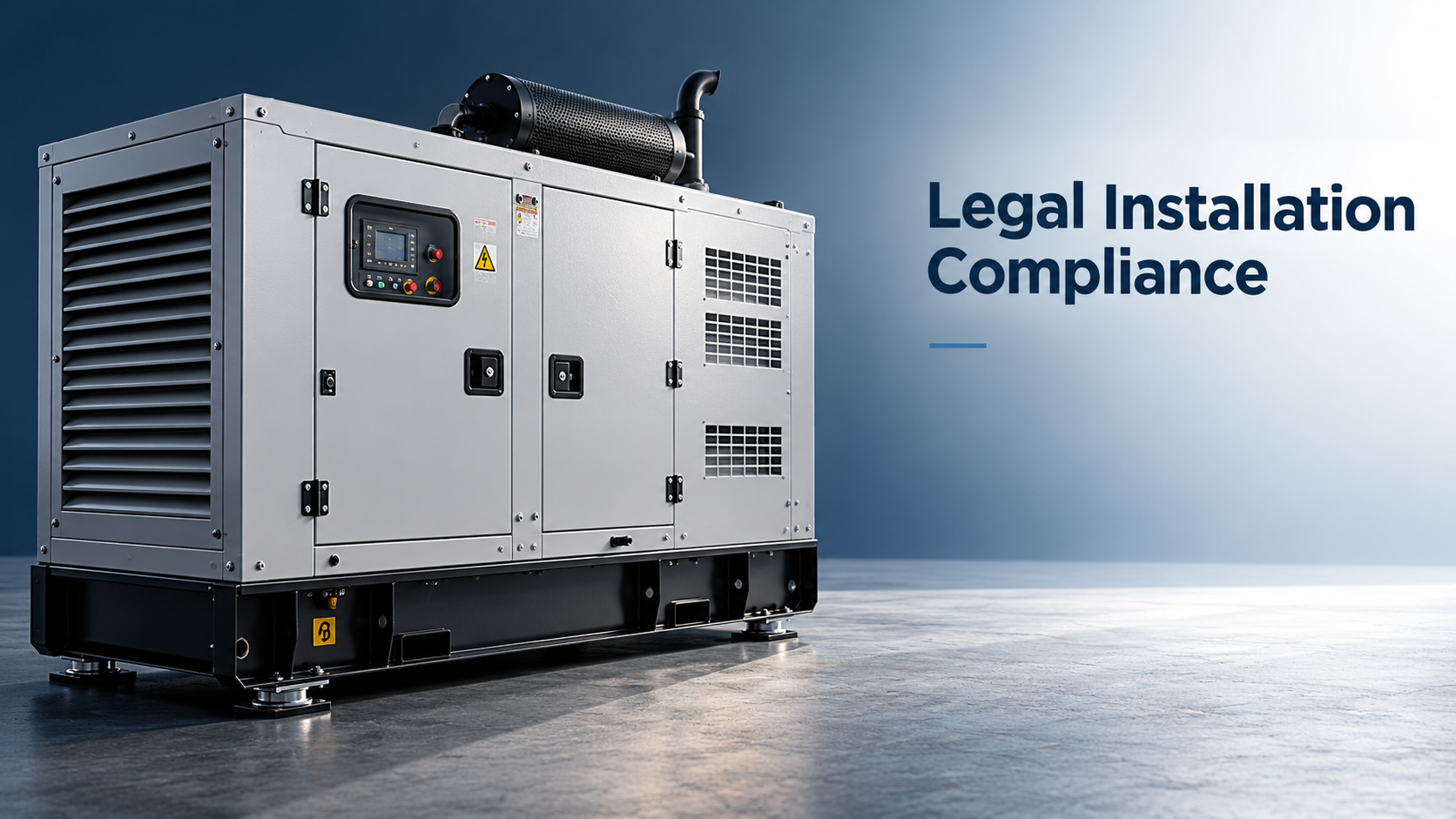
Installing an industrial generator set is fundamentally a regulatory process before it becomes a mechanical one. When project managers ask what permits are needed to install industrial generator set legally, the most accurate answer is that there is no single universal document. Instead, you are navigating a matrix of environmental, structural, and electrical approvals. The specific permits required depend entirely on the generator’s capacity, its physical placement, the local jurisdiction's strictness, and whether the unit is designated for emergency standby or continuous operation. Understanding this regulatory landscape early prevents costly project delays and ensures uninterrupted operations for critical facilities.
Environmental Clearances: Emissions and Noise Control
Environmental permits are typically the most time-consuming part of the approval process. Regulatory bodies focus on two main outputs: exhaust emissions and acoustic pollution. Securing these approvals requires precise technical data rather than general assumptions.
For diesel generator sets, air quality management districts require detailed emission calculations. You must submit the engine manufacturer's emission data to prove the unit meets local limits for nitrogen oxides (NOx), particulate matter (PM), and carbon monoxide (CO). The regulatory classification of the engine matters significantly. Units certified under non-road mobile machinery standards often face different scrutiny compared to those classified as stationary sources. If you are specifying a 2000kW unit for a data center, the emission modeling and scrutiny will be significantly higher than for a 200kW unit at a remote mining site.
Noise permits are equally critical, particularly for hospitals and urban factories. Local ordinances dictate maximum decibel levels at the property line, which can be exceptionally strict in mixed-use or residential-adjacent zones. To secure this permit, you usually need to submit a comprehensive acoustic assessment. This is where specifying the right equipment from the outset is vital. Sourcing a properly designed silent type generator from a source manufacturer, complete with certified acoustic test reports, provides the exact attenuation data environmental agencies require. Relying on theoretical estimates or attempting to retrofit acoustic enclosures after delivery frequently leads to permit rejections.
Building, Structural, and Fire Safety Permits
Once environmental baselines are established, the physical installation must pass building and fire code inspections. The Authorities Having Jurisdiction (AHJ) will evaluate the structural integrity of the site and the safety of the fuel system.
If the generator is installed on a rooftop or an upper floor, a structural engineering sign-off is mandatory. The engineering review must confirm that the slab can handle the static and dynamic loads, including the weight of the fuel, the alternator, and the vibration forces during full-load operation. For indoor installations, the architectural and mechanical permits become highly complex. You must demonstrate that the ventilation system provides adequate combustion air and that the exhaust routing meets clearance requirements from building intakes and property lines.
Fire permits focus heavily on fuel storage and handling. Whether you are using an integrated day tank or a separate bulk storage facility, the installation must comply with flammable and combustible liquid codes. Fire marshals will inspect the clearance around the unit, the fire rating of the enclosure, and the containment systems for potential fuel spills. For projects utilizing high-voltage configurations or specialized gas generator setups, the fire safety review becomes even more rigorous, requiring specialized hazard classification documentation and advanced suppression system approvals.
Electrical Codes and Utility Interconnection
Even if the generator is strictly for backup power and never intended to run in parallel with the grid, electrical permits are non-negotiable. The local building department and the utility company must verify that the installation will not create a safety hazard for grid workers or damage local infrastructure.
You will need an electrical permit for the wiring from the generator to the Automatic Transfer Switch (ATS) and the main distribution panel. The utility company may also require an interconnection agreement. They need to verify that the anti-islanding protection is correctly configured so that the generator automatically disconnects if the main grid fails, preventing dangerous backfeeding. For large-scale industrial projects, such as factories requiring customized power distribution, the utility might require a detailed single-line diagram and a protection coordination study before granting permission to energize the system.
Variables That Dictate Permit Complexity
The timeline and difficulty of securing these permits vary wildly based on a few operational variables. Recognizing these variables helps project managers set realistic expectations and allocate resources appropriately.
- Application Profile: Emergency standby generators, which only run during grid outages and for limited maintenance hours, generally face a streamlined permitting process. Prime or continuous power generators, which run for extended periods, are often treated like industrial manufacturing equipment and face the strictest emission and operational limits.
- Fuel Type and Storage: Diesel is the standard, but if your project utilizes gas generators or integrates energy storage power equipment, you are dealing with multiple regulatory frameworks. Gas lines require separate mechanical permits, and battery storage introduces specific fire suppression and thermal runaway compliance requirements.
- Replacement vs. New Installation: Replacing an old generator with a new one of the same size sometimes triggers "new source review" rules, meaning the new unit must meet current emission standards even if the old one was grandfathered in. Conversely, increasing the capacity during a replacement can trigger a full environmental review.
- Location Sensitivity: A ground-level installation in an designated industrial zone is straightforward. The same unit placed in a dense commercial area or near a residential boundary will trigger rigorous noise and air dispersion modeling.
Strategic Approaches for Project Managers
To avoid the common trap of having a generator delivered to a site that is not legally cleared to receive it, project managers should integrate compliance into the procurement and design phases.
First, engage the AHJ early. Before finalizing the equipment specifications, have a preliminary discussion with the local fire marshal and air quality officer. Understanding their specific interpretation of the codes can prevent you from designing a system that is technically sound but locally unapprovable. Some jurisdictions have specific preferences for certain types of exhaust after-treatment systems or noise barrier designs.
Second, leverage the documentation provided by source manufacturers. Companies like EPOWER, which supply 20-3000KW diesel generator sets featuring engines from Cummins, Perkins, Mercedes Benz, Mitsubishi, Yuchai, Weichai, and Scania, provide comprehensive factory certification packages. Having the exact engine emission certificates, alternator specifications, and acoustic attenuation data ready in your permit application eliminates the back-and-forth requests from reviewers. When sourcing customized exports or specialized one-stop power supply solutions, ensuring the manufacturer understands the target country's regulatory framework is just as important as the technical specifications.
Finally, sequence your applications logically. Environmental and structural permits often need to be approved before the electrical permit can be issued. Building a realistic timeline that accounts for these dependencies, and allowing buffer time for third-party engineering reviews or load bank testing permits, ensures your power infrastructure comes online exactly when the project requires it.
Navigating the legal requirements for installing an industrial generator set is a multidisciplinary effort. It requires aligning mechanical specifications with environmental limits, structural realities, and electrical safety codes. By treating compliance as a core engineering parameter rather than an administrative afterthought, project managers can secure the necessary approvals efficiently, ensuring that critical facilities maintain the reliable backup power they depend on.
Specialized field of steel wire ropes
24/7 before-sales and after-sales services
Comprehensive technical support