



Which Certifications Matter When Selecting a Hospital Silent Generator
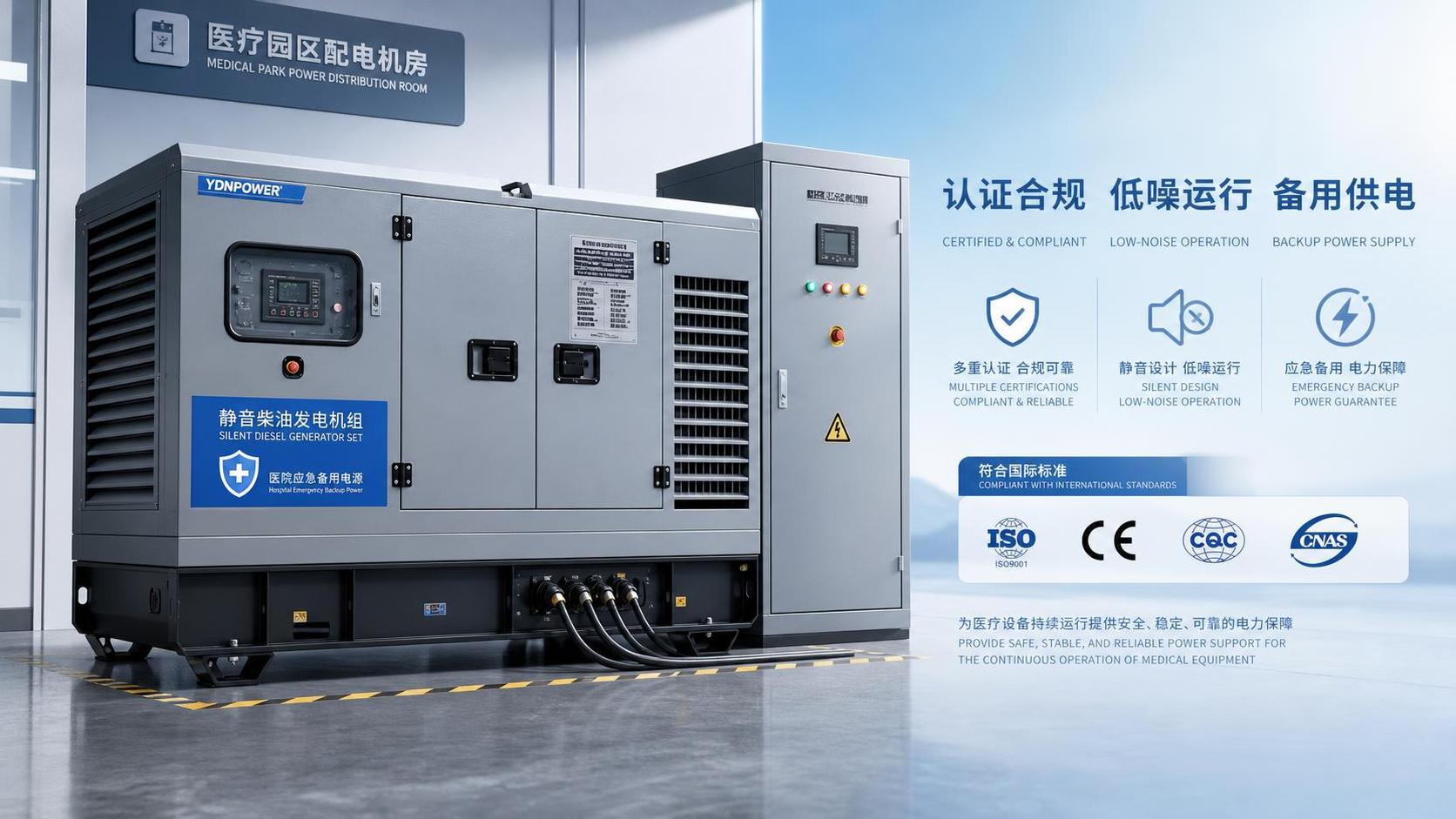
When choosing a hospital silent generator, certifications are just as critical as performance, safety, and uptime. Buyers comparing EPOWER silent generator for hospital use often also review silent generator noise level specifications, compliance standards, and long-term reliability. This guide explains which certifications truly matter, how they affect procurement decisions, and why they should be evaluated alongside EPOWER diesel generator set reviews and fuel efficiency.
Why certifications directly affect hospital generator selection
A hospital backup power system is not a standard industrial purchase. It supports operating rooms, ICUs, imaging equipment, pharmacy cold storage, fire systems, and digital records. If the generator fails, the issue is not only downtime. It becomes a patient safety and compliance risk.
That is why many buyers look beyond nameplates and compare certification scope, controller compatibility, acoustic design, installation conditions, and service access. In practice, a silent unit with the right certificates is easier to approve, import, install, and maintain.
- Certifications reduce procurement uncertainty by showing that key safety and manufacturing processes follow recognized requirements.
- They help engineering teams check whether the unit can match hospital power architecture, emissions rules, and noise restrictions.
- They also influence export clearance, site acceptance, insurance review, and long-term operating confidence.
For buyers reading EPOWER diesel generator set reviews, this is an important distinction. Reviews may describe field performance, but certifications give structured evidence for quality systems, electrical safety, acoustic enclosure design, and applicable compliance routes.
Which certifications matter most for a hospital silent generator?
Not every certificate carries equal value. Some relate to manufacturing systems, some to product safety, and some to market entry. Procurement teams should ask suppliers to explain exactly what each document covers: the genset, the alternator, the controller, the enclosure, or the whole assembled unit.
Core certification categories to verify
- Quality management certification, commonly aligned with ISO 9001, helps confirm standardized production, inspection, and traceability processes.
- Environmental management and occupational safety management systems may be relevant for buyers with formal ESG or supplier approval procedures.
- Product conformity documents such as CE-related declarations may be important for specific export destinations and electrical safety expectations.
- Engine emissions compliance depends on the target country. This is critical if the generator is installed in urban hospital zones with tighter local rules.
- Acoustic and performance testing reports help validate silent generator noise level specifications rather than relying on brochure claims alone.
The table below helps hospital buyers distinguish which certifications support factory audit, installation approval, export process, and day-to-day operation.
A common mistake is assuming that a component certificate automatically applies to the assembled genset. In a hospital project, buyers should request a document pack that links the engine, alternator, controller, enclosure, and final assembly.
How to evaluate EPOWER silent generator for hospital use beyond paperwork
Certifications matter, but they should be checked alongside actual engineering suitability. A compliant generator can still be the wrong choice if its load acceptance, ventilation design, ATS logic, or maintenance access do not fit the hospital building.
Technical checkpoints procurement teams should compare
- Rated prime and standby output must align with critical and non-critical load segmentation.
- Starting method and controller logic should support household emergency generator automatic transfer concepts at a larger facility scale, especially for automatic restoration and alarm logic.
- Enclosure design should consider air inlet resistance, radiator heat rejection, and maintenance door clearance in restricted hospital plant rooms.
- Noise attenuation should be reviewed with real silent generator noise level specifications measured under defined test conditions.
- Fuel autonomy should be compared with diesel generator set fuel consumption comparison data at 50%, 75%, and full load.
Guangdong Yundong Diesel Generator, known as EPOWER, is relevant here because it operates as a source manufacturer in Foshan and covers 20-3000KW diesel generator sets. For hospital buyers, this range makes it easier to match small clinic backup needs, medium hospital standby systems, and larger integrated campus projects.
Its portfolio includes open, silent, high-voltage, gas, and energy storage power equipment, as well as brand engine options such as Cummins, Perkins, Mercedes Benz, Mitsubishi, Yuchai, Weichai, and Scania. That gives procurement teams more flexibility when balancing certification route, lead time, fuel efficiency, and service preference.
Which standards are often overlooked during hospital generator procurement?
Many projects focus only on engine brand and kVA rating. In hospitals, that is too narrow. The overlooked items are usually installation-specific, and they create delays during design approval or commissioning.
Frequently missed compliance points
- Control panel safety and wiring documentation, including alarm logic, emergency stop arrangement, and ATS interlock compatibility.
- Exhaust, ventilation, and fuel system compliance with local fire and building codes rather than only generator factory documents.
- Site noise criteria at property boundaries, rooftop locations, and nighttime emergency operation periods.
- Maintenance plan details, especially when buyers compare EPOWER Cummins generator set maintenance cost with other engine platforms.
This is where a one-stop supplier can help. A hospital rarely buys only a bare genset. It often needs support for canopy design, export packaging, controller configuration, ATS coordination, and site-specific customization. A manufacturer used to customized exports can usually respond faster to these document and interface requirements.
Certification, noise, fuel use, and cost: how buyers should compare options
Hospital procurement is always a trade-off. Some buyers start with EPOWER industrial generator pricing, others begin with brand preference or local emission rules. The best approach is a weighted comparison that includes compliance, operating cost, and acoustic suitability.
The following comparison table is useful when discussing EPOWER silent generator for hospital use against a generic industrial standby option.
This kind of matrix prevents a low initial quotation from dominating the decision. A cheaper unit that lacks complete documentation, tested acoustics, or clear service planning may cost more after installation changes, delayed approvals, and emergency repairs.
How certifications connect with reliability, maintenance, and long-term value
Reliability is one of the main reasons buyers read EPOWER diesel generator set reviews. In healthcare applications, reliability is not only about the engine brand. It comes from assembly quality, load matching, cooling design, control logic, and maintenance discipline.
Certifications support reliability indirectly. A documented production system helps reduce assembly variation. Traceable testing helps uncover weak points before shipment. Defined inspection stages improve consistency between one unit and the next.
Questions to ask before signing a purchase order
- Can the supplier provide the certification list for the complete set and identify which documents apply to the assembled unit?
- Are the silent generator noise level specifications measured at a defined distance and load, and can that test method be shared?
- What are the expected service intervals, and how does EPOWER Cummins generator set maintenance cost compare with alternatives in your region?
- Does the offered control system support site BMS integration, alarm output, and automatic transfer logic?
- Can the supplier adapt enclosure, voltage, frequency, and export packing for the destination project?
These questions also help separate hospital procurement from other scenarios. For example, an industrial generator set for mining operations may prioritize dust resistance, remote logistics, and heavy-duty continuous loading more than low-noise operation near patient areas. A household buyer comparing EPOWER household backup generator reliability will also care about automatic startup and basic safety, but the compliance depth is different from hospital use.
Practical procurement guide for hospitals, clinics, and medical campuses
A practical selection process keeps the project moving and prevents technical gaps between procurement, consultant design, and site installation.
Recommended selection workflow
- Define critical load profile, starting currents, expected runtime, and redundancy strategy.
- Confirm target country requirements for emissions, electrical conformity, and import documents.
- Request acoustic data, layout suggestions, and fuel consumption points instead of only brochure output ratings.
- Compare brand engine options based on maintenance route, parts availability, and local technician familiarity.
- Review EPOWER industrial generator pricing together with canopy level, controller scope, ATS requirements, and documentation package.
Because EPOWER covers open, silent, high-voltage, gas, and energy storage power equipment, buyers can also discuss hybrid or staged backup strategies if the hospital project has unusual load curves, fuel constraints, or expansion plans.
FAQ: what buyers most often ask before ordering a hospital silent generator
How do I know whether a certificate really applies to the full generator set?
Ask for a document list that clearly identifies the manufacturer name, product scope, and covered assembly. If the supplier only shares engine or alternator paperwork, request confirmation for the complete genset, control cabinet, and enclosure as supplied.
Are silent generator noise level specifications enough to approve a hospital project?
Not by themselves. You also need to review installation environment, exhaust routing, wall reflections, rooftop placement, and local boundary limits. A good specification is a starting point, not the final acoustic conclusion.
Why compare diesel generator set fuel consumption comparison data if the unit runs only during outages?
Because hospitals may need extended emergency operation during grid failure, storm recovery, or utility maintenance. Fuel rate affects tank sizing, refill planning, and total operating cost. It also shapes how long the hospital can remain self-supported.
Is EPOWER silent generator for hospital use suitable only for large hospitals?
No. Since the manufacturer covers 20-3000KW, the range can fit smaller clinics, specialist centers, and larger medical campuses. The right size depends on actual load analysis, not on facility label alone.
What else should be reviewed besides reviews and price?
Check certification scope, delivery schedule, control logic, ATS interface, enclosure material, maintenance space, spare parts route, and export support. EPOWER diesel generator set reviews are helpful, but they should be part of a wider technical and compliance decision.
Why work with a source manufacturer when certification demands are high?
Hospital projects often involve repeated document revisions, consultant questions, and site-specific changes. Working with a source manufacturer can simplify communication because the same supplier can coordinate assembly details, engine options, enclosure changes, and export support more directly.
Guangdong Yundong Diesel Generator (EPOWER) offers one-stop power supply solutions across multiple application environments, including hospitals, mines, data centers, and factories. That breadth matters because it reflects experience with different standby expectations, from low-noise healthcare sites to heavy-demand industrial applications.
If you are comparing EPOWER industrial generator pricing, EPOWER silent generator for hospital use, or maintenance considerations such as EPOWER Cummins generator set maintenance cost, a structured supplier discussion can save time before tender finalization and shipment planning.
Contact us for certification review, configuration advice, and quotation support
If your project team is selecting a hospital silent generator, you can consult us on practical items that affect approval and operation, not only on model recommendations.
- Confirm required certification documents for your country, tender package, or consultant checklist.
- Compare engine brands, standby ratings, and diesel generator set fuel consumption comparison points for your runtime target.
- Review silent generator noise level specifications against your plant room or outdoor installation conditions.
- Discuss ATS coordination, household emergency generator automatic transfer logic concepts, and hospital-level control requirements.
- Request lead time, export packaging, customization options, and quotation support for open, silent, high-voltage, gas, or energy storage power equipment.
A clear inquiry with your target kW, voltage, frequency, installation type, and certification expectations will help narrow the right configuration faster. That is the most reliable way to move from general EPOWER diesel generator set reviews to a hospital-ready solution that fits your project, budget, and compliance path.
Specialized field of steel wire ropes
24/7 before-sales and after-sales services
Comprehensive technical support