



Diesel Generator Set Load Test Procedures for Site Acceptance
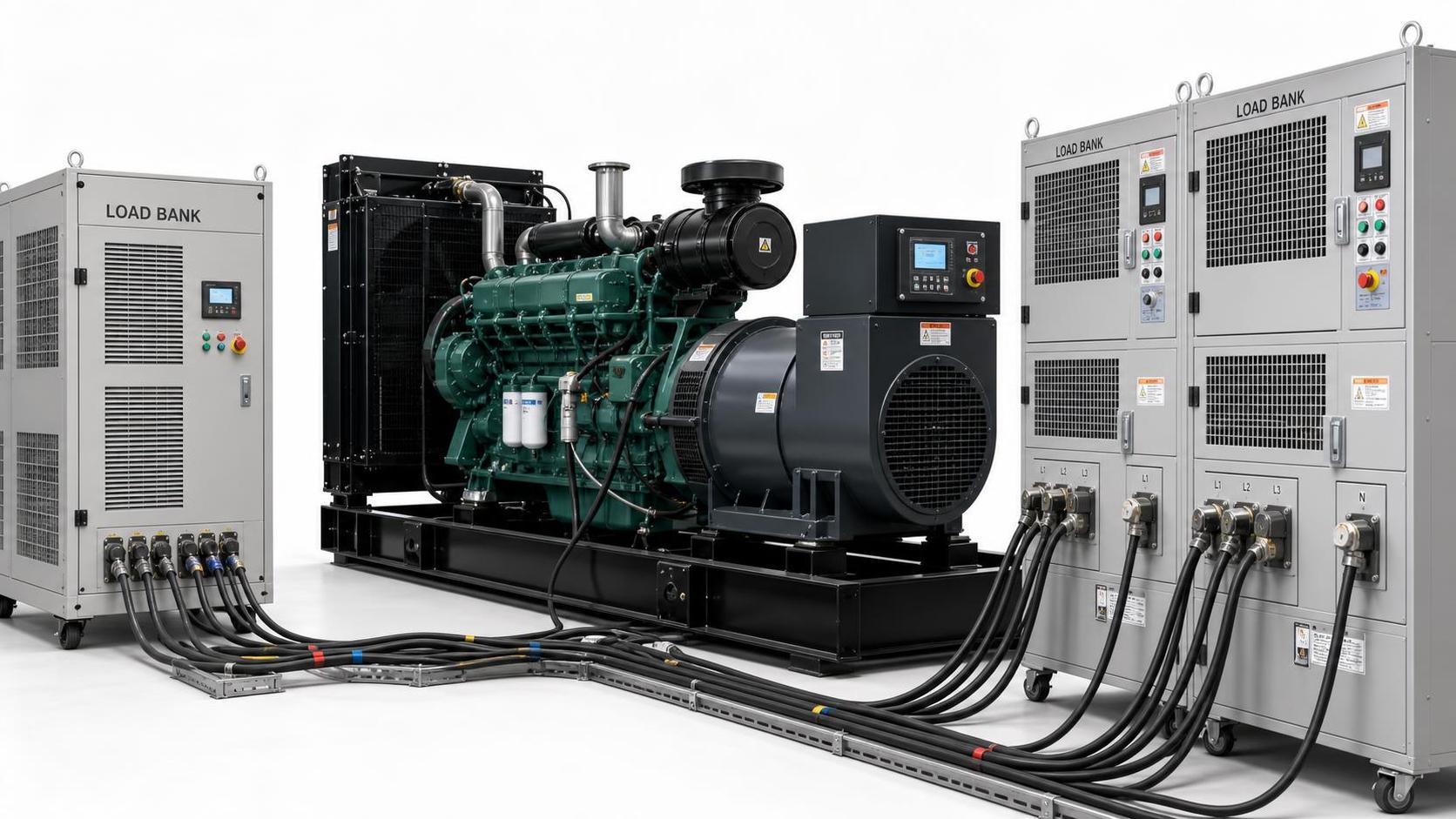
When Site Acceptance Depends on Real-World Load Testing
Diesel generator set load test procedures are often treated as a standard checklist, but the real value comes from understanding how different operating environments change the testing priorities. For a backup power system to be truly reliable, the load bank test must simulate the actual conditions the generator will face. A data center has very different electrical demands compared to a mining operation or a hospital. This is why site acceptance testing (SAT) should never be a one-size-fits-all process. The test procedures need to match the specific application to validate performance and avoid future failures.
Enterprise decision-makers evaluating a diesel generator set for a critical facility must look beyond the kW rating. The real question is whether the unit can handle the load profile, environmental stressors, and operational cycles of that specific site. A generator that passes a simple factory test might fail during an actual power outage if the site acceptance protocol did not account for transient loads, ambient temperature, or harmonic distortion. Understanding these nuances is the first step toward securing a power solution that truly protects operations.
Why Load Profile Differences Change Testing Priorities
The most common mistake during site acceptance is assuming that all diesel generator set load tests are the same. In practice, the load profile of a hospital is completely different from that of a factory. A hospital typically has a mix of critical life-support equipment, imaging machines, and HVAC systems that create sudden load steps. A factory, on the other hand, might have large motor loads that cause high inrush currents. These differences mean the test procedure must focus on different performance parameters.
For a data center, voltage and frequency stability under transient conditions is the top priority. A slight dip could crash servers. For a mine, the focus might be on the generator’s ability to handle sustained high load in a dusty, high-temperature environment. The load bank test should be designed to stress these specific areas. This is where a source manufacturer like Guangdong Yundong Diesel Generator (EPOWER) provides value by tailoring the test setup to match the actual site conditions, rather than offering a generic procedure.
How to Identify the Critical Load Type for Your Site
Before conducting the load test, it is essential to perform a load audit. This means identifying which loads are non-linear, which have high starting currents, and which are sensitive to power quality. For example, modern medical imaging equipment often produces harmonics that a standard diesel generator set might not handle well without proper filtering. A site acceptance test that ignores harmonic distortion will leave the facility vulnerable.
The table below outlines typical load characteristics for different sites and what the load test should validate. This helps in designing a test procedure that is both rigorous and relevant.
Scenarios Where Ambient Conditions Change the Test
One of the most overlooked factors in diesel generator set load test procedures is the ambient temperature and altitude. A generator rated for 1000kW at sea level might only deliver 850kW at a high-altitude mine. Similarly, a unit operating in a hot desert environment will have a different power output than one in a temperate climate. The site acceptance test must be conducted at the actual site conditions, or at least with corrected load bank settings.
For instance, a hospital in a mountainous region needs to verify that the generator can still handle the full load on a hot summer day. If the test is done in a cool factory, the results will be misleading. Guangdong Yundong EPOWER often recommends adding a safety margin for derating when the site has extreme conditions. This is not a failure of the equipment but a physical reality that must be accounted for in the load test procedure. Failing to do so can lead to a false sense of security.
The Impact of Altitude and Temperature on Performance
When performing a load test, the diesel generator set’s control system should be set to account for the ambient conditions. For example, a turbocharged engine compensates better at altitude than a naturally aspirated one. The load bank should be applied in stages, and the generator’s response should be monitored closely. If the engine struggles to maintain frequency or temperature rises too fast, the load may need to be reduced.
A common scenario is a facility that installs a generator based on a standard rating but fails to test it at the actual site temperature. Later, during a summer blackout, the unit trips. The load test procedure should include a high-temperature run to verify cooling system performance. This is especially important for silent or enclosed units where heat dissipation is restricted.
Understanding the Difference Between Resistive and Reactive Loads
Many load test procedures rely solely on resistive load banks, which simulate simple heating loads. However, real-world facilities have inductive loads like motors and transformers. A diesel generator set that performs well on a resistive load test might fail when connected to a reactive load. This is a critical distinction for sites like factories and mines where motors are a major part of the load.
A proper site acceptance test should include a reactive load component or use a power factor test. For a data center, the load is often leading power factor due to UPS systems, which can cause voltage regulation issues. The generator’s automatic voltage regulator (AVR) must be capable of handling this. If the test only uses resistive loads, these issues remain hidden. It is a common misjudgment to assume that passing a resistive load test guarantees full performance.
What to Check During the Reactive Load Test
When performing a load test with reactive loads, monitor the voltage regulation and the generator’s ability to maintain power factor. A diesel generator set from a reliable manufacturer like EPOWER, which offers units with Perkins or Cummins engines, can usually handle a power factor of 0.8 lagging. But the test should confirm this under varying load conditions. If the site has a significant amount of non-linear loads, a harmonic analysis should also be part of the procedure.
The table below shows the typical differences between resistive and reactive load testing and what each validates for the diesel generator set.
Common Misjudgments During Site Acceptance Testing
A frequent oversight is not testing the diesel generator set under a full load rejection scenario. In a real power outage, the load might be suddenly disconnected. The generator must be able to handle the overspeed condition without tripping. This is particularly important for data centers where the transfer switch might operate quickly. The site acceptance test should include a sudden load dump to verify the governor response.
Another common misjudgment is ignoring the fuel system. A load test that runs for a few hours might not reveal issues with fuel contamination or air in the fuel lines. For a hospital or mine that requires extended runtime, a longer endurance test with load cycling is necessary. The diesel generator set should be tested with the actual fuel tank and fuel supply system to ensure no blockages or leaks occur under load.
How to Avoid These Oversights
To avoid these misjudgments, the site acceptance test plan should be reviewed by an engineer familiar with the specific application. The procedure should include a list of conditions that must be checked, such as ambient temperature, fuel quality, and load type. It is also wise to consult with the manufacturer about any known limitations of the specific diesel generator set model. For example, a unit with a Scania engine might have different transient response than one with a Yuchai engine.
A practical approach is to create a checklist that covers the load profile, environmental factors, and the specific test steps. This ensures that the test is not just a formality but a true validation of the backup power system. The goal is to find any weaknesses before the generator is needed in an emergency.
Next Steps for a Reliable Site Acceptance
The key takeaway is that diesel generator set load test procedures must be tailored to the actual site. Generic tests often miss critical issues that only appear under specific conditions. Start by defining the load profile and environmental conditions of your facility. Then, design a test procedure that includes resistive and reactive loads, transient testing, and endurance runs.
For decision-makers, the next step is to work with a supplier who understands these nuances. Guangdong Yundong EPOWER, as a source manufacturer, offers the ability to customize the test procedure based on the application. Whether it is a hospital, mine, or data center, verifying the generator set under real-world conditions is the only way to ensure it will perform when needed. Take the time to review the test plan and confirm it covers all the critical points for your specific scenario.
Specialized field of steel wire ropes
24/7 before-sales and after-sales services
Comprehensive technical support