



How Does Automatic Transfer Work for a Household Emergency Generator
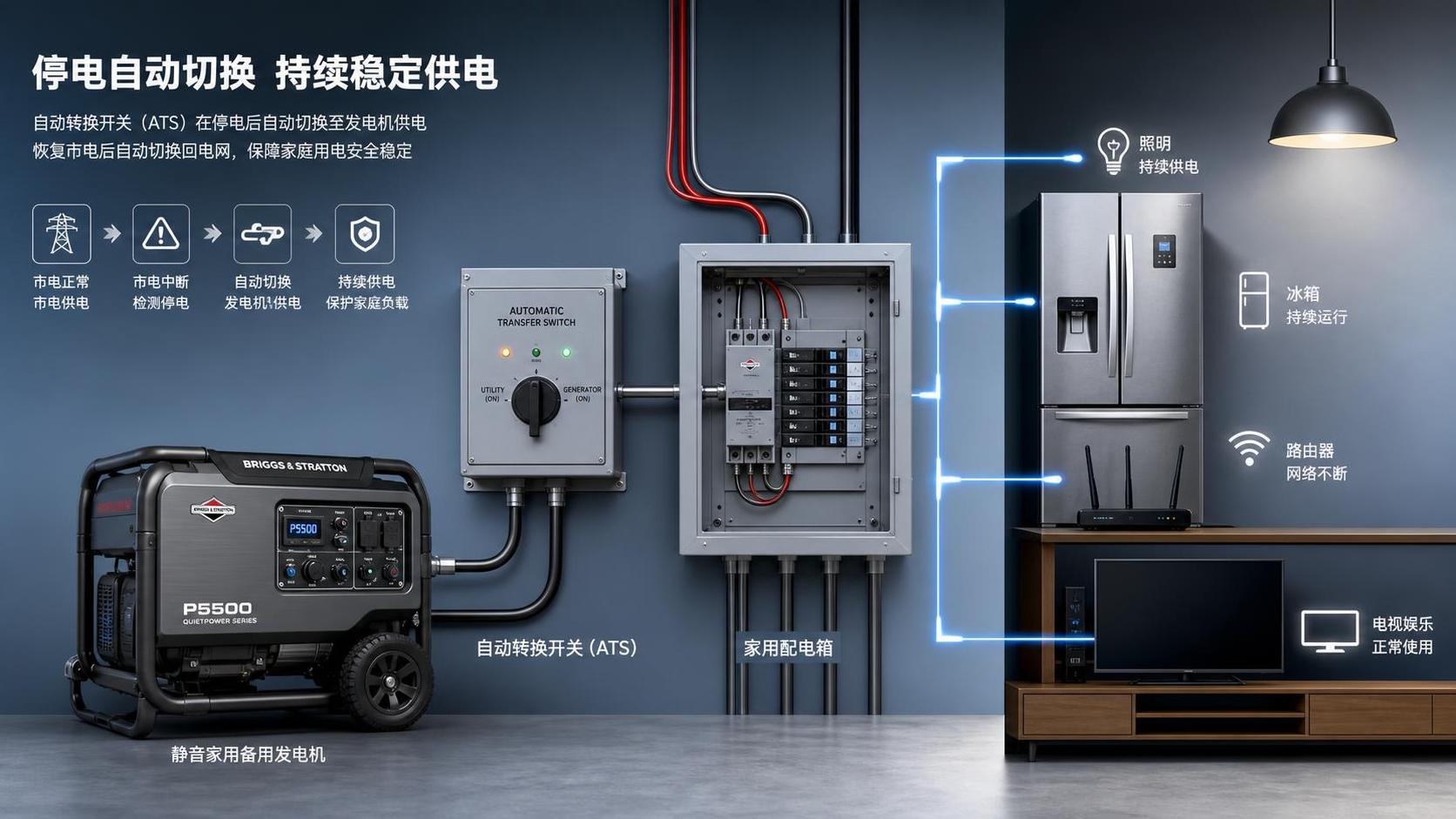
When the grid fails, a household emergency generator automatic transfer system switches your home to backup power in seconds—often without you lifting a finger. Understanding how this process works helps homeowners choose safer, more reliable standby solutions for essential loads like lighting, refrigeration, and medical devices. In this guide, we’ll explain the transfer sequence, key components, and what to consider before installing a home backup power system.
For buyers comparing home backup options, the transfer mechanism is not a minor accessory. It determines how quickly power returns, how safely the generator isolates from the utility, and whether critical circuits stay energized during a 5-second outage or a 5-hour blackout.
Although Guangdong Yundong Diesel Generator (EPOWER) is widely involved in 20-3000KW diesel generator sets and integrated power solutions for industrial applications, the same engineering logic behind reliable transfer systems also matters in residential standby design, especially for export customization and backup power planning.
What a Household Emergency Generator Automatic Transfer System Actually Does
A household emergency generator automatic transfer system monitors incoming utility power 24/7. When voltage drops below a preset threshold or disappears completely, the controller starts the generator and shifts selected household loads from the grid to the backup source.
In most standby setups, the transfer sequence takes about 10-30 seconds from outage detection to load acceptance. The exact timing depends on controller settings, generator warm-up requirements, voltage stabilization, and whether the home uses whole-house coverage or only essential circuits.
Core purpose of automatic transfer
The first purpose is safety. The transfer switch prevents backfeeding into utility lines, which can damage equipment and create hazards for line workers. The second purpose is continuity. It restores power to loads such as refrigerators, sump pumps, routers, lighting, and medical devices without manual rewiring.
Why homeowners prefer automatic transfer over manual switching
- Response time is usually measured in seconds rather than several minutes.
- No need to go outdoors during storms, snow, or nighttime outages.
- Reduced risk of operator error during startup and load connection.
- Better protection for 3-8 essential circuits or full-home backup plans.
For homes where a freezer, security system, or oxygen concentrator cannot stay off for long, automatic transfer is often the difference between a manageable outage and a serious disruption.
Main components inside the system
Before selecting equipment, it helps to understand the major parts that make a household emergency generator automatic transfer setup work as one coordinated system.
The key takeaway is that automatic transfer depends on coordination, not just generator capacity. A correctly sized generator can still underperform if the transfer switch rating, sensing logic, or startup battery maintenance is overlooked.
Step-by-Step: How Automatic Transfer Works During a Power Outage
The transfer process follows a clear sequence. While settings vary by manufacturer and code requirements, most standby systems use 5 basic stages from utility failure detection to retransfer after grid recovery.
Stage 1: Utility power monitoring
The ATS continuously monitors voltage and frequency on the utility side. If voltage falls outside acceptable limits, such as a deep undervoltage event or complete loss of one phase in applicable systems, the controller starts an outage timer.
Stage 2: Generator start command
After a short verification delay, often 2-10 seconds, the controller sends a start signal. This delay prevents nuisance starts caused by momentary flickers or very short utility disturbances.
Stage 3: Warm-up and voltage stabilization
The generator reaches rated speed and stabilizes output. Depending on engine type and ambient temperature, this may take another 5-20 seconds. During this period, the ATS confirms acceptable voltage and frequency before connecting the home load.
Stage 4: Load transfer to generator
The switch opens the utility source and closes the generator source. This break-before-make action is critical because it prevents the utility and generator from being connected at the same time.
Stage 5: Retransfer after utility returns
When stable grid power returns, the ATS usually waits 30 seconds to several minutes before retransferring. This avoids repeated switching during unstable restoration. After retransfer, the generator often runs unloaded for a 1-5 minute cool-down period before shutdown.
The timeline below shows a practical view of what homeowners can expect from a household emergency generator automatic transfer sequence.
Even though the transfer action itself is very fast, the total outage-to-power-restoration window usually includes sensing, startup, and stabilization. That is why homeowners may still notice a short interruption before backup power comes online.
Automatic Transfer Switch Types for Residential Backup Power
Not every home needs the same transfer strategy. The right ATS configuration depends on load size, appliance starting current, installation budget, and whether the owner wants whole-house backup or only priority circuits.
Whole-house ATS
A whole-house switch is installed at the service entrance, often with 100A, 150A, or 200A ratings. It can support broad coverage, but the generator must be large enough to handle diversified demand or use load-shedding controls.
Essential-load transfer panel
This arrangement powers selected circuits only, such as kitchen refrigeration, lights, communications, a small HVAC zone, and water pumps. It is often more cost-effective for homes needing 5kW-15kW standby capacity rather than full-home coverage.
ATS with load management
Some systems can prioritize loads in sequence. For example, air conditioning compressors, electric water heaters, or EV charging may be temporarily locked out. This helps a smaller generator support a wider range of home functions without overload trips.
The comparison below can help purchasers match transfer type to actual household operating needs.
For many residential projects, essential-load backup offers the best balance between capital cost, fuel efficiency, and outage resilience. However, homes in storm-prone areas or remote sites may justify a larger whole-house standby configuration.
How to Size the Generator and Transfer Switch Correctly
A household emergency generator automatic transfer system performs well only when the generator and ATS are matched to the real electrical demand. Oversizing increases capital and fuel costs, while undersizing causes nuisance trips, poor motor starting, and unstable operation.
Start with running load and starting load
Homeowners should list both continuous loads and surge loads. A refrigerator may run at a modest wattage but pull 2-3 times more during compressor start. Pumps and air conditioners can create even larger inrush current demands.
Typical residential capacity ranges
- 5kW-8kW: basic essentials such as lights, refrigerator, router, and a few outlets
- 8kW-15kW: essentials plus sump pump, small HVAC loads, and more circuits
- 15kW-30kW: larger homes, central systems, or broader whole-house support
The transfer switch must also be rated correctly. A 200A service entrance does not automatically mean the generator can carry the full connected load, but the ATS still has to suit the electrical system architecture and code-compliant isolation requirements.
Four practical sizing checkpoints
- Count all critical loads that must run during a 2-hour, 8-hour, or 24-hour outage.
- Separate motor starting loads from simple resistive loads.
- Allow reserve capacity, often 10%-20%, for future changes and startup margin.
- Confirm ATS amperage, voltage, and pole configuration with the electrician.
Installation Risks, Compliance Points, and Maintenance Priorities
Residential standby equipment may look straightforward, but transfer reliability depends heavily on proper installation practice. Poor grounding, incorrect conductor sizing, weak battery maintenance, or improper neutral switching can compromise performance when an outage actually happens.
Common risks during installation
- Undersized fuel planning for outages lasting 12-48 hours
- Improper placement causing ventilation or noise issues
- Transfer switch selected without matching service amperage
- No load-priority strategy for high-starting-current appliances
Routine maintenance schedule
A standby system should not wait until a storm to reveal problems. Many owners schedule an automatic exercise cycle weekly or biweekly. Battery condition, coolant level where applicable, lubrication, and controller alarm history should be checked at regular intervals.
At minimum, homeowners should verify startup, transfer, and retransfer performance several times per year. A full system test under load, rather than only engine cranking, gives a more realistic picture of ATS function and generator stability.
Five inspection items before storm season
- Battery voltage and terminal condition
- Fuel supply status and storage integrity
- Controller alarms or fault codes
- ATS mechanical action and enclosure condition
- Successful no-utility simulation test with selected loads
What Buyers Should Ask Suppliers Before Choosing a Standby Solution
For importers, contractors, and project buyers sourcing generator systems from established manufacturers, the transfer function should be discussed as part of the whole package, not as an afterthought. This is especially true when products are customized for export markets with different voltage, frequency, enclosure, and control requirements.
Questions that improve procurement decisions
- Is the generator intended for whole-house standby or essential-load backup only?
- What ATS ratings are available: 100A, 150A, 200A, or higher?
- Can the controller support delay settings, remote monitoring, and load management?
- What export customization is available for enclosure, sound attenuation, or voltage options?
- What commissioning and after-sales support is offered for installation partners?
Manufacturers with broad experience across open, silent, high-voltage, gas, and energy storage power equipment often understand how to integrate control systems, transfer logic, and application-specific backup needs. That engineering depth can be valuable even when the final project is much smaller than an industrial installation.
Why solution capability matters
A supplier that works across mines, hospitals, data centers, and factories typically deals with stricter continuity requirements, staged transfer logic, and customized power distribution schemes. Those same disciplines help residential and light commercial buyers obtain more dependable standby solutions with fewer design blind spots.
Conclusion: Reliable Backup Power Starts With Reliable Transfer
A household emergency generator automatic transfer system is the control point that turns backup equipment into a practical, safe, and responsive home power solution. It detects outages, starts the generator, isolates utility power, transfers critical loads, and returns the home to the grid after stable restoration.
For homeowners and buyers, the most important decisions include selecting the right transfer type, matching generator capacity to real load demand, planning for 10-30 second restoration timing, and maintaining the system through regular testing. These steps reduce outage risk and improve long-term value.
If you are evaluating standby generator options, customized export configurations, or integrated power solutions from 20-3000KW, Guangdong Yundong Diesel Generator (EPOWER) can support solution-based discussions around generator sets, transfer arrangements, and backup power planning. Contact us now to get a tailored recommendation, discuss product details, or explore more power supply solutions for your market.
Specialized field of steel wire ropes
24/7 before-sales and after-sales services
Comprehensive technical support